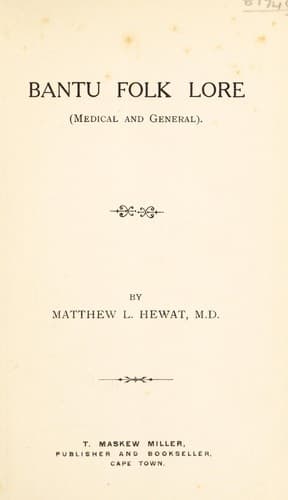
Bantu Folk Lore (Medical and General)Hewat, Matthew L.
Science
Bantu Folk Lore (Medical and General)
Hewat, Matthew L.
Pondo (African people); Traditional medicine -- South Africa; Xhosa (African people); Zulu (African people)
Treatment. a. The fresh juice of the umhlaba (Alœ ferox) is dropped
into the eye with good effect.
b. U-tywala bentaka (Lantano salviæfolia) in the form of an infusion of
the fresh leaves or at times the dried leaves is used. It is very
astringent, causes much smarting and only used in severe cases.
c. The juice pressed from the leaves of U-watile (Hippobromus alata) is
dropped into the eye; or by some, these leaves are chewed and the
saliva applied.
d. Iyeza bamehlo (Scabiosa columbaria) in infusion of the root.
e. I-ran (Urtica) nettle. Of this a paste is made of the leaves and
used externally.
Other affections of the eye are not specialised.
Snake-bite is a very common occurrence and one in the treatment of
which the Native is fairly expert.
I should before describing the treatment, notice the curious fact that
the native never wastes a snake. One seen is pursued till killed, then
its gall bladder is emptied and the gall mixed with the venom from its
venom sacks, and these mixed with clay into a bolus, which is then in
part or whole, swallowed, usually in two doses of a day’s interval. The
immediate effect is one of pleasant somnolence, and according to the
Native, the ultimate effect and that aimed at, is more or less complete
immunity from the dangers of snake-bite for the future.
Some Natives as a result of this practice acquire immunity and will
handle poisonous snakes with a freedom from fear, only accounted for by
a conviction of its being safe for them to do so.
The general method of treatment is:—
The bitten limb is at once tied with a thong or anything available
between the body and the bite and the wound freely incised and bled. A
native cupping-glass “luneka” (a cow’s horn open at either end, suction
by the mouth being applied at the smaller) is then thoroughly used. The
patient is in the meantime dosed freely with one or other of the
numerous snake-bite cures, a mash of the leaves being finally put on as
a poultice.
In some tribes a pit is dug, and filled with bushes, which are burnt.
The ashes are rapidly raked out, and the bitten man rolled in skins
placed in it so as to induce an excessive perspiration, while plant
infusions are freely administered. Not a bad attempt at a domestic
Turkish bath.
The snake-bite plants most commonly used by the Kaffirs are:—
1. Um-fincafincane (Leontis leonurus) chiefly used by the Fingoes.
2. Ubu-hlungu benyushu (Teucrium Africanum) chiefly used by Gcalekas,
Tembus and Pondos.
It is interesting to note that to some extent the native Igqira
recognises the difference of bites by different snakes, using a
different species of Leontis for different cases.
3. Ubu-hlungu-bemamba (Melianthus comosus) is a valued cure amongst the
Pondos and Gaikas. This bark of the root is used.
This plant is also used for other poisonous bites e.g. The intojane, a
poisonous caterpillar, of the shaggy tarantula, this latter being very
common in the thatch of huts.
Public-domain text, read in full here on John Shaqi.
Reviews
Reviews
No reviews yet
Be the first to share your thoughts on this work.
Join the Discussion
Join the discussion
Sign in to leave a comment or review.
Sign InorCreate an account