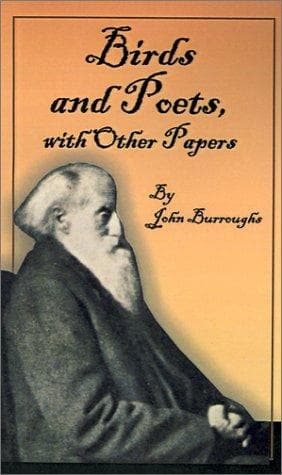
Birds and Poets : with Other PapersBurroughs, John
History
Birds and Poets : with Other Papers
Burroughs, John
American essays -- 19th century; Birds; Natural history -- Outdoor books; Nature
Nature is thoroughly selfish, and looks only to her own ends. One
thing she is bent upon, and that is keeping up the supply, multiplying
endlessly and scattering as she multiplies. Did Nature have in view our
delectation when she made the apple, the peach, the plum, the cherry?
Undoubtedly; but only as a means to her own private ends. What a bribe
or a wage is the pulp of these delicacies to all creatures to come and
sow their seed! And Nature has taken care to make the seed indigestible,
so that, though the fruit be eaten, the germ is not, but only planted.
God made the crab, but man made the pippin; but the pippin cannot
propagate itself, and exists only by violence and usurpation. Bacon
says, "It is easier to deceive Nature than to force her," but it seems
to me the nurserymen really force her. They cut off the head of a savage
and clap on the head of a fine gentleman, and the crab becomes a Swaar
or a Baldwin. Or is it a kind of deception practiced upon Nature, which
succeeds only by being carefully concealed? If we could play the same
tricks upon her in the human species, how the great geniuses could be
preserved and propagated, and the world stocked with them! But what a
frightful condition of things that would be! No new men, but a tiresome
and endless repetition of the old ones,--a world perpetually stocked
with Newtons and Shakespeares!
We say Nature knows best, and has adapted this or that to our wants or
to our constitution,--sound to the ear, light and color to the eye; but
she has not done any such thing, but has adapted man to these things.
The physical cosmos is the mould, and man is the molten metal that is
poured into it. The light fashioned the eye, the laws of sound made
the ear; in fact, man is the outcome of Nature and not the reverse.
Creatures that live forever in the dark have no eyes; and would not any
one of our senses perish and be shed, as it were, in a world where it
could not be used?
II
Public-domain text, read in full here on John Shaqi.
Reviews
Reviews
No reviews yet
Be the first to share your thoughts on this work.
Join the Discussion
Join the discussion
Sign in to leave a comment or review.
Sign InorCreate an account