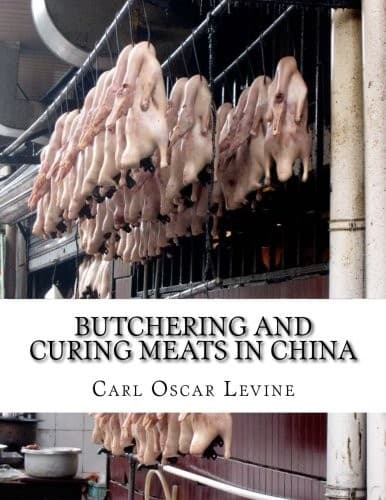
Butchering and curing meats in ChinaLevine, Carl Oscar
Science
Butchering and curing meats in China
Levine, Carl Oscar
Meat -- Preservation; Slaughtering and slaughter-houses -- China
It is important that the animal to be slaughtered should not be given
food from twenty to thirty hours before slaughtering. If kept on full
feed until just before it is killed the circulatory system is gorged,
and the blood, loaded with assimilated nutrients is driven to the
extremities of the capillaries. In such condition, it is impossible to
drain the veins thoroughly, and a reddish colored, unattractive
carcass will result. Food in the digestive tract decomposes very
rapidly after the animal is killed, and when the dressing is slow the
gases from such decomposing food are apt to flavor the meat.
Water should be given freely up to the time of slaughter, as it helps
to keep the temperature normal and helps to wash the waste matter from
the system, resulting in a nicely colored carcass.
The care of the animals before slaughter has considerable effect on
the meat. They should not be excited in any way sufficiently to raise
the body temperature. Excitement will prevent proper draining of the
blood vessels, and, if extreme, will cause souring of the meat on
curing. An animal should never be killed immediately after it has been
heated by a hard run. It is better to let such an animal rest until
the next day rather than to run the risk of the meat spoiling, as the
meat of an animal that has been overheated will not keep well. Such
meat is usually of pale color and very often will become sour or
putrid within three or four days after it has been dressed, even
though kept near the freezing point while it is being cured.
Care should be taken not to bruise the animals in handling them just
before killing. Bruises cause the blood to settle in the part of the
carcass affected, presenting an uninviting appearance, besides
affecting the curing qualities of the meat.
Before killing, a twenty-five hour fast, plenty of clean water,
careful handling and rest, are all important items in securing the
best quality of meat, either for cooking fresh or for curing purposes.
Bleeding and Dressing Hogs
§ 11. Tools
The essential tools for doing good work at killing time are: A good
sticking knife, a cleaver, a 14-inch steel on which to sharpen the
knives, hog hooks, bell-shaped scrapers, meat saw, and gambrel. More
than one of each tool is necessary if many hogs are to be butchered
and handled efficiently. A block and tackle will reduce labor in
hanging the hog for gutting.
§ 12. Scalding Equipment
Public-domain text, read in full here on John Shaqi.
Reviews
Reviews
No reviews yet
Be the first to share your thoughts on this work.
Join the Discussion
Join the discussion
Sign in to leave a comment or review.
Sign InorCreate an account