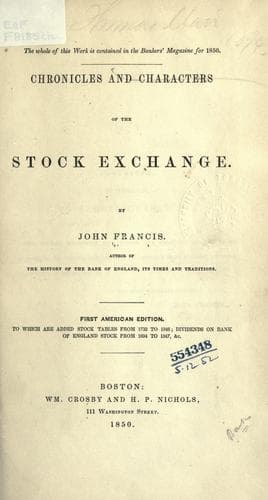
Chronicles and characters of the stock exchange — John Shaqi
Chronicles and characters of the stock exchangeFrancis, John, of the Bank of England
History
Chronicles and characters of the stock exchange
Francis, John, of the Bank of England
Speculation; Stock Exchange (London, England)
The Parliamentary records of William’s reign are curious. The demands
which he made for money, the hatred to France which he encouraged,
and the frequent supplies he received, are remarkable features in his
history. Every art was employed; at one time a mild remonstrance,
at another a haughty menace, at a third the reproach that he had
ventured his life for the benefit of the country. The bribery during
this reign was the commencement of a system which has been very
injurious to the credit and character of England. The support of
the members was purchased with places, with contracts, with titles,
with promises, with portions of the loans, and with tickets in the
lottery. The famous axiom of Sir Robert Walpole was a practice and
a principle with William; he found that custom could not stale
the infinite variety of its effect, and that, so long as bribes
continued, so long would supplies be free. Exorbitant premiums were
given for money; and so low was public credit, and so great public
corruption, that, of 5 millions granted to carry on the war, only 2-½
millions reached the exchequer. Long annuities and short annuities,
lottery-tickets and irredeemable debts, made their frequent
appearance; and the duties, which principally date from this period,
were most pernicious. The hearth-tax was nearly as obnoxious as the
poll-tax. The custom and excise duties were doubled. The hawker and
the hackney-coach driver, companies and corporations, land and labor,
came under his supervision. Births, burials, and bachelors were
added to the list, and whether a wife lost a husband, or whether
a widow gained one, the effect was alike. Beer and ale, wine and
vinegar, coal and culm, all contributed to the impoverished state;
and although some who looked back with regret occasionally indulged
their spleen, the general tone of the Parliament was submissive.
Still, there were times when the truth was spoken; and truths like
the following were unpleasant:—
“We have provided,” said Sir Charles Sedley, “for the army; we have
provided for the navy; and now we must provide for the list. Truly,
Mr. Speaker, ’tis a sad reflection that some men should wallow in
wealth and places, while others pay away in taxes the fourth part of
their revenue. The courtiers and great officers feel not the terms,
while the country gentleman is shot through and through. His Majesty
sees nothing but coaches and six, and great tables, and therefore
cannot imagine the want and misery of the rest of his subjects. He is
encompassed by a company of crafty old courtiers.”
Public-domain text, read in full here on John Shaqi.
Reviews
Reviews
No reviews yet
Be the first to share your thoughts on this work.
Join the Discussion
Join the discussion
Sign in to leave a comment or review.
Sign InorCreate an account