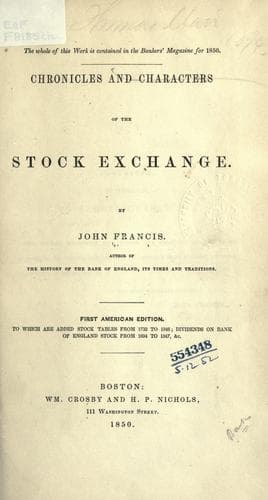
Chronicles and characters of the stock exchangeFrancis, John, of the Bank of England
History
Chronicles and characters of the stock exchange
Francis, John, of the Bank of England
Speculation; Stock Exchange (London, England)
In 1716, great difficulty was experienced in procuring a loan of
£600,000. The interest offered was four per cent.; and while the
propriety of the loan was being debated on the second evening, Mr.
Lechmere entered the House hastily, and told them that only £45,000
had been subscribed. Sir Robert Walpole instantly rose, and said,
“I know that the members of the Stock Exchange have combined not to
advance money on the loan. Every one is aware how the administration
of this country has been distressed by stock-jobbers.” The interest
of four per cent. appeared so low to men accustomed to the enormous
premiums of a few years previous, that they treated the proposed
terms with contempt, and enlisted the sympathy of the public by
reporting that it was the first step towards the reduction of the
interest on the national debt. When the same minister proposed a
loan of £1,700,000, to supply a deficiency, the opposition was so
great, that, had not Sir Robert appealed to an empty exchequer, and
declared that the debt had been incurred by a previous government,
he would have been refused. The feelings of the House were greatly
incensed by the discovery that the money was jobbed away with
unequalled recklessness; and public-spirited men were not wanting
to resist, in the name of the country, such shameless expenditure.
They protested, because—and the protest drawn in 1729 would do for
1849—“the national debt ought not to be increased when the taxes are
heavily felt in all parts of the country; when our foreign trade is
encumbered and diminished; when our manufactures decay; when our
poor daily multiply; and when national calamities surround us.”
The report of the commissioners appointed to inquire into public
accounts sanctioned the opposition which such men as Sir John Barnard
gave to unjust demands. They proved that colonels received large
sums from clothing contractors, as premiums for their favor, and
that £1,400 had been given for a single contract. “The practice,”
said the report, “is so notorious and universal, that it wants
no representation.” Some barefaced practices were related in the
same document; nor can there be any wonder that, with such gross
mismanagement, it was said,—“The army was in the field, no money in
the treasury,—none of the remitters would contract again. The Bank
refused to lend £100,000 on good security. The navy was 11 millions
in debt, and the yearly income greatly deficient.”
In 1717 the Bank first undertook the payment of dividends to the
national creditors, previous to which they were paid quarterly;
when, however, they were undertaken by the Bank, this plan was found
inconvenient, and since that period they have been paid half-yearly.
Public-domain text, read in full here on John Shaqi.
Reviews
Reviews
No reviews yet
Be the first to share your thoughts on this work.
Join the Discussion
Join the discussion
Sign in to leave a comment or review.
Sign InorCreate an account