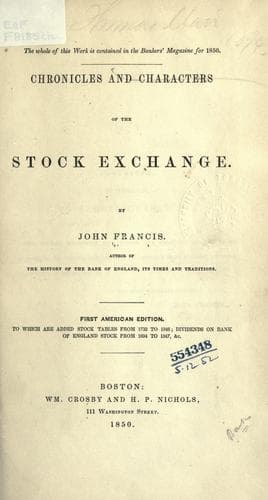
Chronicles and characters of the stock exchangeFrancis, John, of the Bank of England
History
Chronicles and characters of the stock exchange
Francis, John, of the Bank of England
Speculation; Stock Exchange (London, England)
Richard II. pawned the jewels of the crown, sold the furniture of the
palace, went from place to place in the fashion of one soliciting
alms, and was deposed partially because he extorted large sums which
he never repaid. The reign of Henry V., brilliant as it was, would
have proved yet more so, had an authorized mode of raising supplies
been then organized. Although he took from all quarters, sold his
jewels, and borrowed on the security of his crown, he was often
compelled to stop in a career of the most splendid success for lack
of money. Edward IV. was called the handsomest tax-gatherer in his
kingdom; and when he kissed a widow because she gave more than he
expected, it is said she doubled the amount, in expectation of a
second kiss. Henry VII. adopted all modes and methods; and, having
levied a benevolence, made a large claim on those who lived frugally,
because they must have saved by their frugality; while, if they lived
splendidly, they were dealt with as opulent. It must, however, be
recorded of this monarch, that he lent money, without interest, to
many merchants whose capital was not sufficient for their commercial
operations. When the eighth Henry attempted to raise a forced loan
of unusual amount, with unusual rigor, the people said, if they were
treated thus, “England was bond, and not free.” The county of Suffolk
rose in arms; and had not even this man’s stubborn spirit quailed
before it, the resistance would have changed into rebellion. No
sooner had the monarch exhausted all Parliamentary supplies, than he
carried out, on a grand scale, the robberies he had often achieved
on a small one, by seizing the accumulated property of the monastic
classes. In 1522, he required a general loan of ten per cent. upon
all property from £20 to £300, and a higher rate on larger sums. By
courtesy, it was termed a loan; but when, seven years afterwards, a
subservient Parliament acquitted him of all obligation to pay it,
a harsher name was recorded in the minds, than the tongues of the
people dared to express.
Public-domain text, read in full here on John Shaqi.
Reviews
Reviews
No reviews yet
Be the first to share your thoughts on this work.
Join the Discussion
Join the discussion
Sign in to leave a comment or review.
Sign InorCreate an account