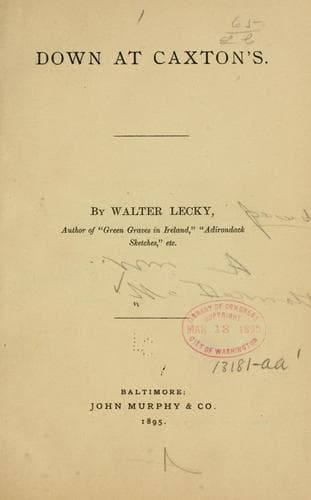
American literature -- 19th century -- History and criticism; American literature -- Catholic authors -- History and criticism
While the author will not concede that mere literary form is the all
in all that our modern masters claim, yet he would not be found in the
ranks of M. de Bonniers, who declares that an author need not trouble
himself about his grammar; let him have original ideas and a certain
style, and the rest is of no consequence. The author of “Phases of
Thought,” believes first in the possession of ideas, for without them
an author is a sorry spectacle. He also believes that an attractive
style will materially aid in the diffusion of these ideas. Many good
books fall still-born from the press, for no other reasons than their
slovenly style. Readers now-a-days will not plod along poor roads,
when a turnpike leads to the same destination. The grammar marks the
parting of ways. Brother Azarias rightfully holds that good grammar is
an essential part of every great writer’s style. Classics are so, by
correct grammar as well as by original ideas. This easy dictum of the
slipshod writers—that if an idea takes you off your feet you must not
trouble yourself about the grammar that wraps it, is but a specious
pleading for their ignorance of what they pretend to despise.
The great difference between this book and the many on similar subjects
is in the manner of treatment. It starts from a solid basis; that
basis the creed of the Catholic Church. The superstructure of lofty
thought reared on this basis is in a style at once pellucid and crisp.
The author is not only a thinker rare and original; he is a scholar
broad and masterly.
Public-domain text, read in full here on John Shaqi.
Reviews
Reviews
No reviews yet
Be the first to share your thoughts on this work.
Join the Discussion
Join the discussion
Sign in to leave a comment or review.
Sign InorCreate an account