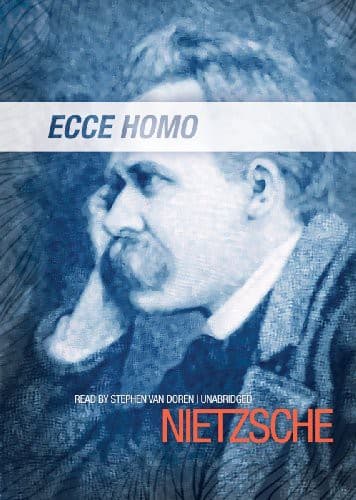
Ecce Homo: Complete Works, Volume SeventeenNietzsche, Friedrich Wilhelm
PhilosophyPhilosophy
Ecce Homo: Complete Works, Volume Seventeen
Nietzsche, Friedrich Wilhelm
Nietzsche, Friedrich Wilhelm, 1844-1900; Philosophers -- Germany -- Biography
the soul," what is all this if it is not a recipe for decadence? Loss
of ballast, resistance offered to natural instincts, selflessness,
in fact--this is what has hitherto been known as morality. With _The
Dawn of Day_ I first engaged in a struggle against the morality of
self-renunciation.
"JOYFUL WISDOM: LA GAYA SCIENZA"
1
_Dawn of Day_ is a yea-saying book, profound, but clear and kindly. The
same applies once more and in the highest degree to _La Gaya Scienza:_
in almost every sentence of this book, profundity and playfulness go
gently hand in hand. A verse which expresses my gratitude for the most
wonderful month of January which I have ever lived--the whole book is a
gift--sufficiently reveals the abysmal depths from which "wisdom" has
here become joyful.
"Thou who with cleaving fiery lances
The stream of my soul from its ice dost free,
Till with a rush and a roar it advances
To enter with glorious hoping the sea:
Brighter to see and purer ever,
Free in the bonds of thy sweet constraint,--
So it praises thy wondrous endeavour,
January, thou beauteous saint!"[1]
Who can be in any doubt as to what "glorious hoping" means here, when
he has realised the diamond beauty of the first of Zarathustra's
words as they appear in a glow of light at the close of the fourth
book? Or when he reads the granite sentences at the end of the third
book, wherein a fate for all times is first given a formula? The songs
of Prince Free-as-a-Bird, which, for the most part, were written in
Sicily, remind me quite forcibly of that Provencal notion of "_Gaya
Scienza,_" of that union of _singer, knight, and free spirit,_ which
distinguishes that wonderfully early culture of the Provencals from
all ambiguous cultures. The last poem of all, "To the Mistral,"--an
exuberant dance song in which, if you please, the new spirit dances
freely upon the corpse of morality,--is a perfect Provençalism.
[Footnote 1: Translated for _Joyful Wisdom_ by Paul V. Cohn.--TR.]
"THUS SPAKE ZARATHUSTRA: A BOOK FOR ALL AND NONE"
1
Public-domain text, read in full here on John Shaqi.
Reviews
Reviews
No reviews yet
Be the first to share your thoughts on this work.
Join the Discussion
Join the discussion
Sign in to leave a comment or review.
Sign InorCreate an account