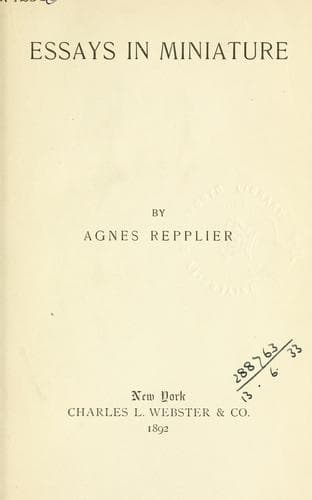
American essays -- 19th century; Literature -- History and criticism
But foreign cooks looked doubtfully upon these national dainties, and,
in place of the old-time gravies, which were simply the broths in which
meat had been boiled, flavored with a little ginger and sugar, delicate
and highly seasoned sauces were devised for the tempting of weary
appetites. Italy sent forks—those curious and uncanny implements—which
were received with scornful indignation, as calculated to destroy the
simplicity and manliness of Great Britain. Spoons and knives were held
in slight esteem, for good soup could be swallowed from the bowl, and
his sacred Majesty, Charles XII. of Sweden, was not the only monarch who
buttered his bread with his royal thumb. But forks were contemptible
affectations. As honest Master Breton observed, he had done no foul
work, and handled no unwholesome thing, and consequently had no need of
an instrument with which to make hay of his food and pitch it into his
mouth. So, too, the time-honored custom of man and wife eating out of
one trencher was falling into rapid disuse, and Walpole tells us that
the old Duke and Duchess of Hamilton were the last couple in England who
retained the fashion of their youth. Meats were growing daintier and
dearer all the while. The ordinary or inn dinner, which in Elizabeth’s
day cost sixpence, had risen to tenpence in the reign of George I., and
soon crept up to a shilling. In every generation there were plenty of
grumblers to lament over the good old times that had fled, and we catch
the echo of this undying cry in the modern protests against unwelcome
fashions. Thackeray and Trollope railed perpetually at that feeble
striving after an impossible elegance which had well-nigh destroyed the
cheery conviviality of their youth; and Peacock, the prince of good
livers, with whom the pleasures of the intellect and the appetite walked
amicably hand in hand, has recorded his still more vehement denunciation:
“I detest and abominate,” says Mr. Macborrowdale, “the idea of a Siberian
dinner, where you just look on fiddle-faddles, while your meal is behind
a screen, and you are served with rations like a pauper.”
Public-domain text, read in full here on John Shaqi.
Reviews
Reviews
No reviews yet
Be the first to share your thoughts on this work.
Join the Discussion
Join the discussion
Sign in to leave a comment or review.
Sign InorCreate an account