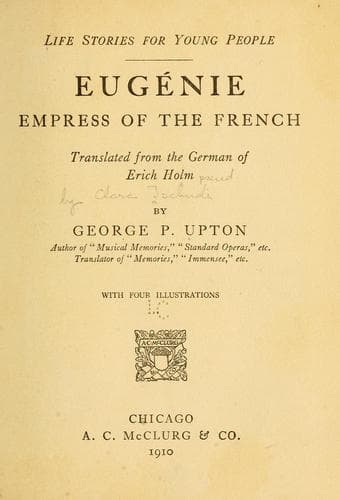
Eugénie, Empress, consort of Napoleon III, Emperor of the French, 1826-1920; Napoleon III, Emperor of the French, 1808-1873 -- Marriage
On the eleventh of January, 1858, a special performance of grand opera
was to be given, and a crowd of loyal subjects had gathered about the
theatre to witness the arrival of the sovereigns. As the state coach
drew up before the entrance, two bombs were hurled at it, and a
frightful explosion followed. Windows in all the neighboring streets
were shattered, and a hundred and sixty persons, among them a number of
soldiers and outriders, were killed or badly wounded. A fragment of
shell pierced the Emperor’s hat; and Eugénie, who tried to protect her
husband’s body with her own, received a slight graze on the temple,
bespattering her white silk dress with blood. Yet, perfectly calm and
undismayed, she stood up at once and called out words of reassurance to
the panic-stricken people. As if nothing had happened, Their Majesties
entered the theatre, and with her usual winning smile the Empress bowed
her thanks to the burst of applause that greeted them. Felix Orsini, the
Italian who had thrown the bombs, was immediately seized and thrown into
prison with his accomplices.
In a proclamation issued on January first, 1859, the Emperor revealed
his intention of severing friendly relations with Austria; and on the
outbreak of war between that country and Sardinia, he hastened to the
support of his new ally, May 10, 1859, publicly declaring that “Italy
must be free from the Alps to the Adriatic.” The victories of Magenta
and Solferino, which followed, added fresh glories to the arms of
France; and although the peace of Villafranca failed to redeem all his
lofty promises, Napoleon was hailed as the deliverer of Italy.
Meanwhile there had been a change in the Government at home which
greatly added to Eugénie’s importance. Shortly after Orsini’s
unsuccessful attempt, the Assembly passed a law appointing her Regent of
France in the Emperor’s absence, or during her son’s minority in case of
his death; and on Napoleon’s departure for Italy the reins of government
were placed for the first time in her hands. It was a critical period at
which to confide the direction of affairs to a woman; had the war been
less fortunate in its issue, the situation might have proved as
dangerous as it afterwards became, in 1870.
Public-domain text, read in full here on John Shaqi.
Reviews
Reviews
No reviews yet
Be the first to share your thoughts on this work.
Join the Discussion
Join the discussion
Sign in to leave a comment or review.
Sign InorCreate an account