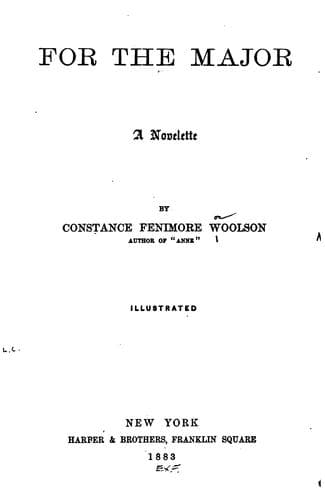
For the Major: A NoveletteWoolson, Constance Fenimore
General
For the Major: A Novelette
Woolson, Constance Fenimore
Psychological fiction; United States -- Social life and customs -- 19th century -- Fiction
He continued to come again. And Miss Carroll continued her neutral
manner. The only change, the only expression of feeling which he had
seen in her in all these weeks, was one look in her eyes and a sentence
or two she had uttered, brought out by something he said about her
mother. During one of their first interviews he had spoken of this lady,
expressing, respectfully, his great liking for her, his admiration.
Madame Carroll's daughter had responded briefly, and rather as though
she thought it unnecessary for him to have an opinion, and more than
unnecessary to express one. He had remembered this little passage of
arms, and had said no more. But having met the mistress of the house a
few days before, at a cabin on the outskirts of the town, where a poor
crippled boy had just breathed his last breath of pain, he had been much
touched by the sweet, comprehending, sisterly tenderness of the mother
who was a lady to the mother who was so ignorant, rough-spoken, almost
rough-hearted as well. But, though rough-hearted, she had loved her poor
child as dearly as that other mother loved her little Scar. The other
mother had herself said this to him as they left the cabin together. He
spoke of it to Sara when he made his next visit at the Farms; he could
not help it.
And then a humility he had never seen there before came into her eyes,
and a warmth of tone he had not heard before into her voice.
"My mother's goodness is simply unparalleled," she answered. "You admire
her sincerely; many do. But no one save those who are in the house with
her all the time can comprehend the one hundredth part of her
unselfishness, her energy--which is always so quiet--her tenderness for
others, her constant thought for them."
Frederick Owen was surprised at the pleasure these words gave him. For
they gave him a great pleasure. He felt himself in a glow as she
finished. He thought of this as he walked home. He knew that he admired
Madame Carroll; and he was not without a very pleasant belief, too, that
she had a respect for his opinion, and even an especial respect. Still,
did he care so much to hear her praised?--care so much that it put him
in a glow?
Towards the last of August occurred, on its regular day, one of Madame
Carroll's receptions. To Sara Carroll it was an unusually disagreeable
one. She had never been fond of the receptions at any time, though of
late she had accepted them because they were so much to her father; but
this particular one was odious.
Public-domain text, read in full here on John Shaqi.
Reviews
Reviews
No reviews yet
Be the first to share your thoughts on this work.
Join the Discussion
Join the discussion
Sign in to leave a comment or review.
Sign InorCreate an account