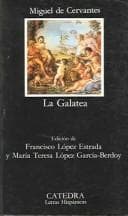
Spanish fiction -- Translations into English; Spanish poetry -- Translations into English
It may seem strange that Cervantes, whose transcriptions from life are
eminently distinguished for truth and force, should have been induced
to experiment in the province of artificial, languid pastoralism. But
if, as Taine would have it, climate makes the race, the race makes
the individual, and at this period the races of Western Europe had
gone (so to say) pastorally mad.[56] The pastoral novel is not to our
modern taste; but, as there is no more stability in literature than in
politics, its day may come again.[57] In Cervantes's time there was
no escaping from the prose idyll. Prodigious tales from the Indies
had stimulated the popular appetite for wonders, and the demand was
supplied to satiety in the later chivalresque romances. Feliciano de
Silva and his fellows could think of nothing better than the systematic
exaggeration of the most marvellous episodes in _Amadís de Gaula_. The
adventures became more perilous, the knights more fantastically brave,
the ladies (if possible) lovelier, the wizards craftier, the giants
huger, the monsters more terrific, and so forth. In this vein nothing
more was to be done: the formula was exhausted. The rival and more
cultured school, founded by Sannazaro, endeavoured to lead men's minds
from these noisy banalities to the placid contemplation of nature, or
rather of idealized antiquity, by substituting for the din of arms, the
stir of cities, and the furrowing of strange oceans by the prows of
vulgar traders, the still, primeval
"Summers of the snakeless meadow, unlaborious earth, and oarless sea."
Unluckily no departure from Sannazaro's original pattern was thought
legitimate. Sir Philip Sidney rejects every attempt at innovation with
the crushing remark that "neyther Theocritus in Greek, Virgill in
Latine, nor Sanazar in Italian did affect it."[58] Hence the unbroken
monotony of the pastoral convention. Nothing is easier than to mock at
this new Arcadia where beauteous shepherdesses vanish discreetly behind
glades and brakes, where golden-mouthed shepherds exchange confidences
of unrequited passion, arguing the high metaphysical doctrine of
Platonic love, or chanting most melancholy madrigals at intervals which
the seasoned reader can calculate to a nicety beforehand. There never
was, and never could be, such an atmosphere of deliberate dilettantism
in such a world as ours. Taken as a whole these late Renascence
pastorals weary us, as Sidney's _Arcadia_ wearied Hazlitt, with their
everlasting "alliteration, antithesis and metaphysical conceit,"
their "continual, uncalled-for interruptions, analysing, dissecting,
disjointing, murdering everything, and reading a pragmatical,
self-sufficient lecture over the dead body of nature." Briefly, while
these pastoral writers of the sixteenth century persuaded themselves
and their readers that they were returning to communion with hills
and forests, to us it seems as though they offered little beyond
unassimilated reminiscences of conventional classicism.
Public-domain text, read in full here on John Shaqi.
Reviews
Reviews
No reviews yet
Be the first to share your thoughts on this work.
Join the Discussion
Join the discussion
Sign in to leave a comment or review.
Sign InorCreate an account