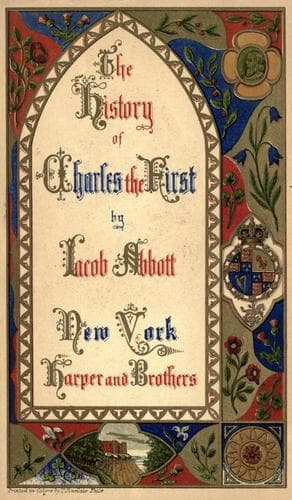
History of King Charles the First of England — John Shaqi
History of King Charles the First of EnglandAbbott, Jacob
History
History of King Charles the First of England
Abbott, Jacob
Charles I, King of England, 1600-1649; Great Britain -- History -- Charles I, 1625-1649; Great Britain -- Kings and rulers -- Biography
It ended, as brawls usually do, in the triumph of the most unreasonable
and violent. James threw himself upon a bed which was in the room,
weeping bitterly, and saying that they would go, and he should lose
his Baby Charley. Considering that Charles was now the monarch's only
child remaining at home, and that, as heir to the crown, his life was
of great consequence to the realm, it is not surprising that his father
was distressed at the idea of his exposing himself to danger on such
an expedition; but one not accustomed to what is behind the scenes in
royal life would expect a little more dignity and propriety in the mode
of expressing paternal solicitude from a king.
[Sidenote: Charles and Buckingham depart.]
[Sidenote: Charles and Buckingham's boisterous conduct.]
Charles and Buckingham set off secretly from London; their two
attendants were to join them in different places--the last at Dover,
where they were to embark. They laid aside all marks of distinction in
dress, such as persons of high rank used to wear in those days, and
took the garb of the common people. They put on wigs, also, the hair
being very long, so as to shade the face and alter the expression of
their countenances. These external disguises, however, were all that
they could command. They could not assume the modest and quiet air
and manner of persons in the ordinary walks of life, but made such
displays, and were so liberal in the use of their money, and carried
such an air and manner in all that they did and said, that all who had
any intercourse with them perceived that they were in disguise. They
were supposed to be wild blades, out on some frolic or other, but still
they were allowed to pass along without any molestation.
[Sidenote: Arrested at Dover.]
They were, however, stopped at Dover, where in some way they attracted
the attention of the mayor of the town. Dover is on the Channel,
opposite to Calais, at the narrowest point. It was, of course,
especially in those days, the point where the principal intercourse
between the two nations centered. The magistrates of the two towns
were obliged, consequently, to be on the alert, to prevent the escape
of fugitives and criminals, as well as to guard against the efforts of
smugglers, or the entrance of spies or other secret enemies. The
Mayor of Dover arrested our heroes. They told him that their names were
Tom Smith and Jack Smith; these, in fact, were the names with which
they had traveled through England thus far. They said that they were
traveling for amusement. The mayor did not believe them. He thought
they were going across to the French coast to fight a duel. This was
often done in those days. They then told him that they were indeed
persons of rank in disguise, and that they were going to inspect the
English fleet. He finally allowed them to embark.
[Sidenote: Arrival at Paris.]
[Sidenote: Princess Henrietta.]
Public-domain text, read in full here on John Shaqi.
Reviews
Reviews
No reviews yet
Be the first to share your thoughts on this work.
Join the Discussion
Join the discussion
Sign in to leave a comment or review.
Sign InorCreate an account