How to Get Strong and How to Stay SoBlaikie, William
Science
How to Get Strong and How to Stay So
Blaikie, William
Physical education and training
earnestly covets, and which he is not yet quite sure that he can hold.
Some of his muscles are developing fast. His recitations are, perhaps,
suffering a little, but never mind that just now, when he thinks that
there is more important work on hand. The young fellow's appetite is
ravenous. He never felt so hearty in his life, and is often told how
well he is looking. He attracts attention because likely to be a
representative man. He never filled out his clothes as he does now. His
legs are improving noticeably. They ought to do so, for it is not one or
two miles, but three or four, which he runs on almost every one of
those days in the hundred in which he is not rowing.
Our young athlete has not always gone into the work from mere choice. For
instance, one of a recent Harvard Freshman crew told the writer that he had
broken down his eyes from over-use of them, and, looking about for some
vigorous physical exercise which would tone him up quickly and restore his
eyesight, and having no one to consult, he had taken to rowing.
The years roll by till the whole four are over, and our student is about
to graduate. He looks back to see what he has accomplished. In physical
matters he finds that, while he is a skilful, and perhaps a decidedly
successful, oar, and that some of his measurements have much improved
since the day he was first measured, others somehow have not come up
nearly as fast, in fact, have held back in the most surprising way. His
chest-girth may be three or even four inches larger for the four years'
work. Some, if not much, of that is certainly the result of growth, not
development, and, save what running did, the rest is rather an increase
of the back muscles than of front and back alike. Strong as his back
is--for many a hard test has it stood in the long, hot home-minutes of
more than one well-fought race--still he has not yet a thoroughly
developed and capacious chest. Doubtless his legs have improved, if he
has done any running. (In some colleges the rowing-men scarcely run at
all.) His calves have come to be well-developed and shapely, and so too
have his thighs, while his loins are noticeably strong-looking and well
muscled up, and so indeed is his whole back. But if he has done
practically no other arm-work than that which rowing and the preparation
for it called for, his arms are not so large, especially above the
elbow, as they ought to be for a man with such legs and such a back. The
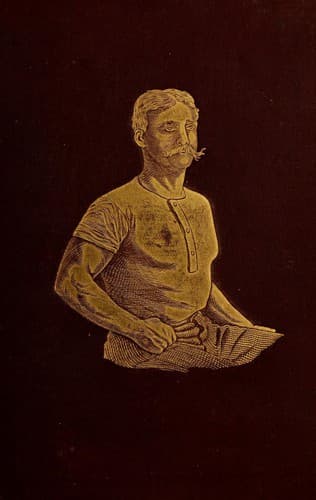
front of his chest is not nearly so well developed as his back, perhaps
is hardly developed at all, and he is very likely to carry himself
inerectly, with head and neck canted somewhat forward, while there is a
lack of fulness, often a noticeable hollowness, of the upper chest, till
the shoulders are plainly warped and rounded forward.
[Illustration: Fig. 1. A warped University Oarsman,
imperfectly developed in Muscles not used in Rowing.]
Public-domain text, read in full here on John Shaqi.
Reviews
Reviews
No reviews yet
Be the first to share your thoughts on this work.
Join the Discussion
Join the discussion
Sign in to leave a comment or review.
Sign InorCreate an account