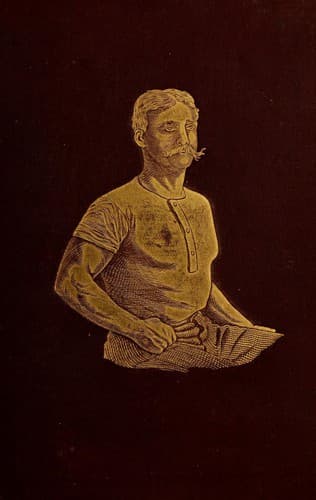
How to Get Strong and How to Stay SoBlaikie, William
Science
How to Get Strong and How to Stay So
Blaikie, William
Physical education and training
Yet, strange as it may seem, this whole idea is an egregious mistake. Most
of the students do take some interest in these contests, but it goes no
farther than talking somewhat about them, and viewing them when they come
off, and perhaps betting the amount of their term-bills on them. The
number who actually take part, either in the racing or the ball matches,
or in trying for a chance in them, is ridiculously small. Dr. Sargent
says that at Yale College, where he has been for six years instructor in
physical culture, they actually do not exceed three per cent. of the whole
number of students, while five per cent. will include every man in college
who takes active work at the gymnasium, on the river, or the ball-field!
Any one familiar with American college athletics knows that the proportion
of students who either play ball or row is probably, taking year and year
together, about as great at Yale as anywhere in the country.
Surprising as these figures are, they prove conclusively that the present
system of college athletics, so far as it assumes to benefit the students
at large, or even a tithe of them, is an utter failure. Here, then,
instead of the supposed advance in the general physical culture over that
of years ago, there has been almost no advance. There are a few men who
devote much time and attention to severe athletics, more than there is any
need of, and become skilled and famous at them, but the great majority do
little or nothing. Better ideas they doubtless have of what is and what is
not creditable performance among the athletes, and also as to the progress
that can be made in muscular development by direct and steady work. But
that progress and that work they have no share in.
The very natural result follows, that the great majority of students, at
graduation, average no better in size, strength, health, vigor, endurance,
or stamina than those of a generation ago, or are any fitter to stand
successfully the wear and tear of their life's work. Indeed, it is very
doubtful if they are physically as well fitted for what is before them as
the previous generation were, for in the latter case probably more came
from farms and homes where much manual labor was necessary, while now a
greater fraction are from the cities, or are the sons of parents whose
occupation is mainly sedentary. Yet in that day gymnasiums at the
colleges were almost unknown, while now they are general.
Does the gymnasium, then, pay? Yes, like a bath-tub--if used,
and used sensibly; but if not, not. Then, as it is used so
little, is it worth having?
Public-domain text, read in full here on John Shaqi.
Reviews
Reviews
No reviews yet
Be the first to share your thoughts on this work.
Join the Discussion
Join the discussion
Sign in to leave a comment or review.
Sign InorCreate an account