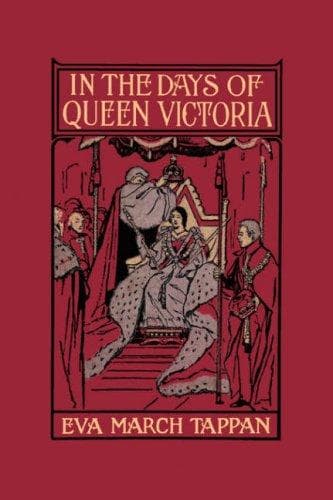
Great Britain -- History -- Victoria, 1837-1901 -- Fiction
Nothing could be more simple than the order of the Princess' day at
Kensington. Breakfast was at eight, and it was eaten out of doors
whenever the weather was good. The Princess sat in a tiny rosewood
chair beside her mother, and the little girl's breakfast was spread on
a low table before her. Whatever other children might have, there were
no luxuries for this child. Bread and milk and fruit made up her
breakfast, and nothing more would have been given her no matter how she
might have begged for it. After breakfast she would have liked to play
with her beloved Feodore, but Feodore had to go to her lessons. When
the weather was fair, however, a pleasure awaited the little girl. Her
uncle, the Duke of York, had given her a white donkey, and at this hour
she was allowed to ride it in Kensington Gardens. Her nurse walked
beside her, and on the other side was an old soldier whom her father
had especially liked. This riding was a great delight to the child, but
there was sometimes a storm of childish wrath before the hour was over,
for the Duchess had said, "She must ride and walk by turns," and when
the turn came for walking, the tiny maiden often objected to obeying
her mother's orders.
When it was time for the Duchess to eat luncheon, the Princess had her
dinner, but it was so simple a meal that many of the servants of the
palace would have felt themselves very hardly used if they had had no
greater variety and no richer fare. The afternoon was often spent under
the trees, and at some time, either before supper or after, came a
drive with her mother. Supper was at seven, but the little girl's meal
consisted of nothing but bread and milk. At nine o'clock she was put to
bed, not in the nursery, but in her mother's room, for the Duchess had
no idea of being separated from her children, and the Princess Feodore
slept at one side of her mother, while on the other hand stood the
little bed of the baby sister.
It was a simple, happy, healthy life. The great objection to it was
that the child rarely had a playmate of her own age. Two little girls,
daughters of an old friend of the Duke's, came once a week to see her,
but they were several years her seniors. Feodore was never weary of
playing with her, but Feodore was almost twelve years older, so that
when the child was four years old, Feodore was quite a young lady.
Perhaps no one realized how much she needed children of her own age,
for she was so merry and cheerful, so ready to be pleased and amused,
and so friendly with everyone who came near her.
A learned clergyman reported that when he called on the Duchess the
little Princess was on the floor beside her mother with her playthings
"of which I soon became one," he added.
One day the Duchess said: "Drina, there is a little girl only a year
older than you who plays wonderfully well on the harp. Should you like
to hear her?"
"I'm almost four years old," was the child's reply. "What is her name?"
Public-domain text, read in full here on John Shaqi.
Reviews
Reviews
No reviews yet
Be the first to share your thoughts on this work.
Join the Discussion
Join the discussion
Sign in to leave a comment or review.
Sign InorCreate an account