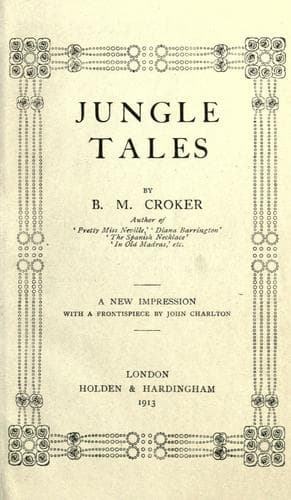
British -- India -- Fiction; India -- History -- British occupation, 1765-1947 -- Fiction; Short stories
Nevertheless, had she but known it, her wrongs were most amply avenged.
Who was there to do the work of the family--nay, of five families?
She who had been their slave for years was sorely missed. The lazy,
useless womenkind had now to cook and bake, draw water and feed cows,
and grumbled loudly and quarrelled savagely among themselves--yea, even
to blows--though the task of one was now portioned among so many. The
patient, graceful figure, toiling to and from the well, or laden with
wood or fodder, was no longer to be met, and was missed by more than
her own household.
“She was the fairest girl in all the district,” said Gopal, the
bunnia’s son. “There was no joy in her life, she seemed glad to die.
Truly her execution was a grand tamasha, and brought many strangers
from afar.”
This was her epitaph.
Jasoda’s name is still green in the memory of the villagers of
Sharsheo; not that they acknowledge any special claim on her part
to beauty, virtue, or martyrdom, but simply because it is not easy
to forget that Jasoda, the daughter of Akin-alloo, and the widow of
Sapona, was hanged.
AN APPEAL TO THE GODS.
“We be the gods of the East,
Older than all;
Masters of mourning and feast,
How shall we fall?”
Within forty miles of where the Himalayas rise from the plains,
and the sunrise unveils the blushing snows--and precisely half a
koss from the Kanāt river--lies the hamlet of Haru, surrounded by
a tangle of castor-oil plants, mango trees, and tamarinds, and
standing in the midst of a fertile tract of cane, corn, and poppy. The
scarlet-and-white poppies, the stiff, green cane, the waving yellow
wheat, also the village (which boasted nine hundred souls at the last
census), were the joint property of two wealthy zemindars. The northern
part of Haru--including the crops sown for the opium department--was
the inheritance of Durga Pershad, a tall, dark, gaunt man, with an
unpleasant and sinister expression. The wheat, cane, and southern
end of the town belonged to Golab Rai Sing, who bore but a scant
resemblance to his name--“the King of Roses;” he was, in fact, a stout,
smiling, pock-marked person, with a glib tongue, and a close fist.
These two zemindars hated one another as thoroughly as men in their
position were not only bound, but born to do. They had not merely been
bequeathed adjoining lands, and a whole village between them, but a
venerable blood feud, which had been conscientiously handed down from
generation to generation.
Public-domain text, read in full here on John Shaqi.
Reviews
Reviews
No reviews yet
Be the first to share your thoughts on this work.
Join the Discussion
Join the discussion
Sign in to leave a comment or review.
Sign InorCreate an account