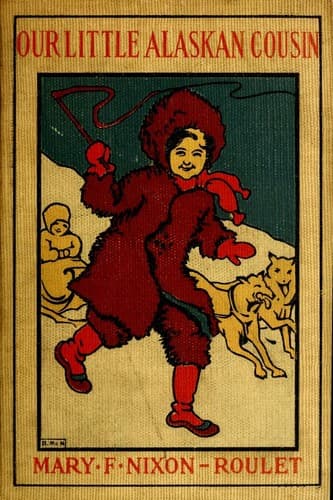
Kalitan, Our Little Alaskan CousinNixon-Roulet, Mary F.
General
Kalitan, Our Little Alaskan Cousin
Nixon-Roulet, Mary F.
Children -- Alaska -- Juvenile literature
"Yehl[13] made many strange things," said Kalitan, who had been taking
in all this information even more eagerly than Teddy. "He first dwelt on
Nass River, and turned two blades of grass into the first man and woman.
Then the Thlinkits grew and prospered, till darkness fell upon the
earth. A Thlinkit stole the sun and hid it in a box, but Yehl found it
and set it so high in the heavens that none could touch it. Then the
Thlinkits grew and spread abroad. But a great flood came, and all were
swept away save two, who tossed long upon the flood on a raft of logs
until Yehl pitied, and carried them to Mt. Edgecomb, where they dwelt
until the waters fell."
"Old Kala-kash tells this story, and he says that one of these people,
when very old, went down through the crater of the mountain, and, given
long life by Yehl, stays there always to hold up the earth out of the
water. But the other lives in the crater as the Thunder Bird, Hahtla,
whose wing-flap is the thunder and whose glance is the lightning. The
osprey is his totem, and his face glares in our blankets and totems."
"I've wondered what that fierce bird was," said Teddy, who was always
quite carried away with Kalitan's strange legends.
"Well, what else do we see on the way to Nome, father?"
"The most remarkable thing happening in the Bering Sea is the seal
industry, but I do not think we pass near enough to the islands to see
any of that. You'd better run about and see the ship now," and the boys
needed no second permission.
It was not many days before they knew everybody on board, from captain
to deck hands, and were prime favourites with them all. Ted and Kalitan
enjoyed every moment. There was always something new to see or hear, and
ere they reached their journey's end, they had heard all about seals and
sealing, although the famous Pribylov Islands were too far to the west
of the vessel's route for them to see them. They sighted the United
States revenue cutter which plies about the seal islands to keep off
poachers, for no one is allowed to kill seals or to land on this
government reservation except from government vessels. The scent of the
rookeries, where millions of seals have been killed in the last hundred
years, is noticed far out at sea, and often the barking of the animals
can be heard by passing vessels.
"Why is sealskin so valuable, father?" asked Ted.
Public-domain text, read in full here on John Shaqi.
Reviews
Reviews
No reviews yet
Be the first to share your thoughts on this work.
Join the Discussion
Join the discussion
Sign in to leave a comment or review.
Sign InorCreate an account