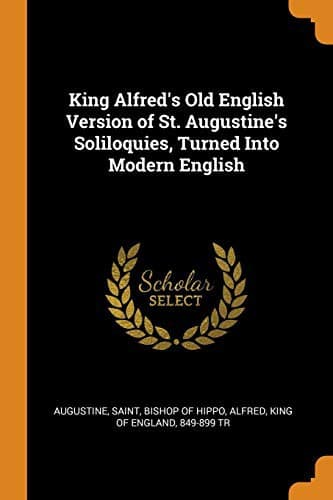
King Alfred's Old English Version of St. Augustine's Soliloquies: Turned into Modern EnglishAugustine, of Hippo, Saint
ReligionChristian
King Alfred's Old English Version of St. Augustine's Soliloquies: Turned into Modern English
Augustine, of Hippo, Saint
Knowledge, Theory of (Religion) -- Early works to 1800
_R._ _Now I hear that thou lovest all that thou dost love on account of
these three things, and I know also which of the three things thou
lovest most. Thou lovest to exist because thou wouldst live, and thou
wouldst live in order to know. Thus I perceive that thou lovest wisdom
above all other things. That, methinks, is the highest good, and also
thy God._
_A._ _Truth thou sayest to me. What is the highest wisdom other than the
highest good? Or what is the highest good except that every man in this
world love God as much as he loveth wisdom--whether he love it much, or
little, or moderately? So much as he loveth wisdom, so much doth he love
God._
_R._ _Very rightly thou hast understood it. But I would we began again
where we were before. Now thou knowest that thou art, and that thou
livest, and that thou knowest something, albeit not so much as thou
wouldst; and a fourth thing thou wouldst also know, to wit, whether the
three things all be eternal or not, or whether any of them be eternal;
or, if they are all eternal, whether any of them after this world in the
eternal life shall either become worse or wane._
[Sidenote: 58.22--59.27]
_A._ _All my yearning hast thou understood very well._
_R._ _About what doubtest thou now? Didst thou not before confess that
God is eternal and almighty, and hath created two rational and eternal
creatures, as we before said, namely: angels and men's souls, to which
He hath given eternal gifts? These gifts they need never lose. If thou
now rememberest this and believest this, then knowest thou beyond doubt
that thou art, and always wilt be, and always wilt love, and always wilt
know something, albeit thou mayest not know all that thou wouldst. Now
thou knowest about those three things that thou askedst about, namely:
(1) Whether thou art immortal; (2) Whether thou shalt know something
throughout eternity; (3) Whether thou, after the parting of the body and
the soul, shalt know more than thou now knowest, or less. After the
fourth we shall still seek--now that thou knowest the three--until thou
also know that._
Public-domain text, read in full here on John Shaqi.
Reviews
Reviews
No reviews yet
Be the first to share your thoughts on this work.
Join the Discussion
Join the discussion
Sign in to leave a comment or review.
Sign InorCreate an account