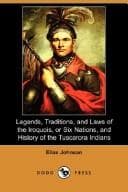
Legends, Traditions, and Laws of the Iroquois, or Six Nations, and History of the Tuscarora IndiansJohnson, Elias
History
Legends, Traditions, and Laws of the Iroquois, or Six Nations, and History of the Tuscarora Indians
Johnson, Elias
Iroquois Indians; Tuscarora Indians
They did not suppose the spirit was instantaneously transferred from
earth to Heaven, but that it wandered in aerial region for many moons. In
later days they only allowed ten days for its flight. Their period for
mourning continued only whilst the spirit is wandering, as soon as they
believe it has entered Heaven they commenced rejoicing, saying, there is
no longer cause for sorrow, because it is now where happiness dwells
forever. Sometimes a piteous wailing was kept up every night for a long
time, but it was only their bereavement that they bewailed, as they did
not fear about the fate of those who died. Not until they had heard of
Purgatory from the Jesuits, or endless woe from Protestants, did they
look upon death with terror, or life as anything but a blessing.
They were sometimes in the habit of addressing the dead, as if they could
hear. The following are the words of a mother as she bends over her only
son to look for the last time upon his beloved face: "My son, listen once
more to the words of thy mother. Thou wast brought into life with her
pains, thou wast nourished with her life. She has attempted to be
faithful in raising you up. When you were young she loved you as her
life. Thy presence has been a source of great joy to her. Upon thee she
depended for support and comfort in her declining days. But thou hast
outstripped her and gone before. Our wise and great Creator has ordered
it thus. By his will, I am left yet, to taste more of the miseries of
this world. Thy relations and friends have gathered about thy body to
look upon thee for the last time. They mourn, as with one mind, thy
departure from among us. We, too, have but a few days more and our
journey will be ended. We part now, and you are conveyed out of our
sight. But we shall soon meet again, and shall look upon each other, then
we shall part no more. Our Maker has called thee home, and thither will
we follow."
After the adoption of the league of the Iroquois, and they dwelled in
villages, this was one of the duties enjoined by their religious teacher
at their festivals: "It is the will of the Great Spirit that you
reverence the aged, even though they be helpless as infants." And also,
"Kindness to the orphan, and hospitality to all." "If you tie up the
clothes of an orphan child, the Great Spirit will notice it, and reward
you for it." "To adopt an orphan, and bring them up in virtuous ways, is
pleasing to the Great Spirit." "If strangers wander about your abode,
welcome him to your home, be hospitable towards him, speak to him with
kind words, and forget not, always to make mention of the Great Spirit."
Public-domain text, read in full here on John Shaqi.
Reviews
Reviews
No reviews yet
Be the first to share your thoughts on this work.
Join the Discussion
Join the discussion
Sign in to leave a comment or review.
Sign InorCreate an account