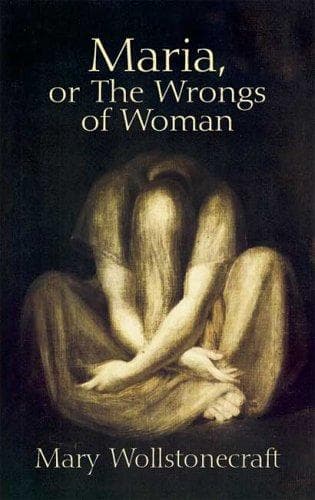
Maria; Or, The Wrongs of WomanWollstonecraft, Mary
General
Maria; Or, The Wrongs of Woman
Wollstonecraft, Mary
Autobiographical fiction; Feminist fiction; Women -- Fiction
[5] The introduction of Darnford as the deliverer of Maria in a former
instance, appears to have been an after-thought of the author. This
has occasioned the omission of any allusion to that circumstance in
the preceding narration. EDITOR. [Godwin’s note]
A few moments were only allowed to Maria to comment on this narrative,
when Darnford left her to her own thoughts, to the “never ending, still
beginning,” task of weighing his words, recollecting his tones of
voice, and feeling them reverberate on her heart.
CHAPTER 4
Pity, and the forlorn seriousness of adversity, have both been
considered as dispositions favourable to love, while satirical writers
have attributed the propensity to the relaxing effect of idleness; what
chance then had Maria of escaping, when pity, sorrow, and solitude all
conspired to soften her mind, and nourish romantic wishes, and, from a
natural progress, romantic expectations?
Maria was six-and-twenty. But, such was the native soundness of her
constitution, that time had only given to her countenance the character
of her mind. Revolving thought, and exercised affections had banished
some of the playful graces of innocence, producing insensibly that
irregularity of features which the struggles of the understanding to
trace or govern the strong emotions of the heart, are wont to imprint
on the yielding mass. Grief and care had mellowed, without obscuring,
the bright tints of youth, and the thoughtfulness which resided on her
brow did not take from the feminine softness of her features; nay, such
was the sensibility which often mantled over it, that she frequently
appeared, like a large proportion of her sex, only born to feel; and
the activity of her well-proportioned, and even almost voluptuous
figure, inspired the idea of strength of mind, rather than of body.
There was a simplicity sometimes indeed in her manner, which bordered
on infantine ingenuousness, that led people of common discernment to
underrate her talents, and smile at the flights of her imagination. But
those who could not comprehend the delicacy of her sentiments, were
attached by her unfailing sympathy, so that she was very generally
beloved by characters of very different descriptions; still, she was
too much under the influence of an ardent imagination to adhere to
common rules.
Public-domain text, read in full here on John Shaqi.
Reviews
Reviews
No reviews yet
Be the first to share your thoughts on this work.
Join the Discussion
Join the discussion
Sign in to leave a comment or review.
Sign InorCreate an account