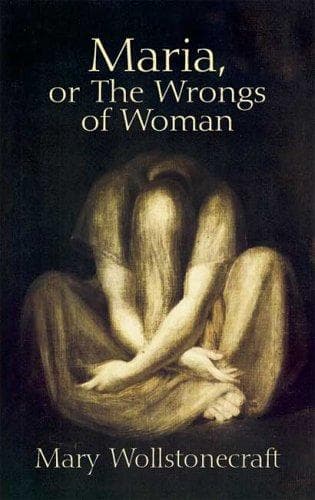
Maria; Or, The Wrongs of WomanWollstonecraft, Mary
General
Maria; Or, The Wrongs of Woman
Wollstonecraft, Mary
Autobiographical fiction; Feminist fiction; Women -- Fiction
“And independence,” said Darnford, “they are necessarily strangers to,
even the independence of despising their persecutors. If the poor are
happy, or can be happy, _things are very well as they are_. And I
cannot conceive on what principle those writers contend for a change of
system, who support this opinion. The authors on the other side of the
question are much more consistent, who grant the fact; yet, insisting
that it is the lot of the majority to be oppressed in this life, kindly
turn them over to another, to rectify the false weights and measures of
this, as the only way to justify the dispensations of Providence. I
have not,” continued Darnford, “an opinion more firmly fixed by
observation in my mind, than that, though riches may fail to produce
proportionate happiness, poverty most commonly excludes it, by shutting
up all the avenues to improvement.”
“And as for the affections,” added Maria, with a sigh, “how gross, and
even tormenting do they become, unless regulated by an improving mind!
The culture of the heart ever, I believe, keeps pace with that of the
mind. But pray go on,” addressing Jemima, “though your narrative gives
rise to the most painful reflections on the present state of society.”
“Not to trouble you,” continued she, “with a detailed description of
all the painful feelings of unavailing exertion, I have only to tell
you, that at last I got recommended to wash in a few families, who did
me the favour to admit me into their houses, without the most strict
enquiry, to wash from one in the morning till eight at night, for
eighteen or twenty-pence a day. On the happiness to be enjoyed over a
washing-tub I need not comment; yet you will allow me to observe, that
this was a wretchedness of situation peculiar to my sex. A man with
half my industry, and, I may say, abilities, could have procured a
decent livelihood, and discharged some of the duties which knit mankind
together; whilst I, who had acquired a taste for the rational, nay, in
honest pride let me assert it, the virtuous enjoyments of life, was
cast aside as the filth of society. Condemned to labour, like a
machine, only to earn bread, and scarcely that, I became melancholy and
desperate.
“I have now to mention a circumstance which fills me with remorse, and
fear it will entirely deprive me of your esteem. A tradesman became
attached to me, and visited me frequently,—and I at last obtained such
a power over him, that he offered to take me home to his
house.—Consider, dear madam, I was famishing: wonder not that I became
a wolf!—The only reason for not taking me home immediately, was the
having a girl in the house, with child by him—and this girl—I advised
him—yes, I did! would I could forget it!—to turn out of doors: and one
night he determined to follow my advice. Poor wretch! She fell upon her
knees, reminded him that he had promised to marry her, that her parents
were honest!—What did it avail?—She was turned out.
Public-domain text, read in full here on John Shaqi.
Reviews
Reviews
No reviews yet
Be the first to share your thoughts on this work.
Join the Discussion
Join the discussion
Sign in to leave a comment or review.
Sign InorCreate an account