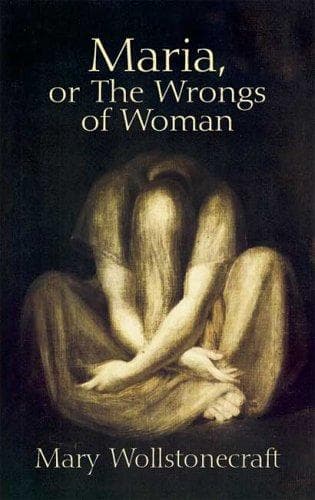
Maria; Or, The Wrongs of WomanWollstonecraft, Mary
General
Maria; Or, The Wrongs of Woman
Wollstonecraft, Mary
Autobiographical fiction; Feminist fiction; Women -- Fiction
“She approached her father’s door, in the skirts of London,—listened at
the shutters,—but could not knock. A watchman had observed her go and
return several times—Poor wretch!—[The remorse Jemima spoke of, seemed
to be stinging her to the soul, as she proceeded.]
“She left it, and, approaching a tub where horses were watered, she sat
down in it, and, with desperate resolution, remained in that
attitude—till resolution was no longer necessary!
“I happened that morning to be going out to wash, anticipating the
moment when I should escape from such hard labour. I passed by, just as
some men, going to work, drew out the stiff, cold corpse—Let me not
recall the horrid moment!—I recognized her pale visage; I listened to
the tale told by the spectators, and my heart did not burst. I thought
of my own state, and wondered how I could be such a monster!—I worked
hard; and, returning home, I was attacked by a fever. I suffered both
in body and mind. I determined not to live with the wretch. But he did
not try me; he left the neighbourhood. I once more returned to the
wash-tub.
“Still this state, miserable as it was, admitted of aggravation.
Lifting one day a heavy load, a tub fell against my shin, and gave me
great pain. I did not pay much attention to the hurt, till it became a
serious wound; being obliged to work as usual, or starve. But, finding
myself at length unable to stand for any time, I thought of getting
into an hospital. Hospitals, it should seem (for they are comfortless
abodes for the sick) were expressly endowed for the reception of the
friendless; yet I, who had on that plea a right to assistance, wanted
the recommendation of the rich and respectable, and was several weeks
languishing for admittance; fees were demanded on entering; and, what
was still more unreasonable, security for burying me, that expence not
coming into the letter of the charity. A guinea was the stipulated
sum—I could as soon have raised a million; and I was afraid to apply to
the parish for an order, lest they should have passed me, I knew not
whither. The poor woman at whose house I lodged, compassionating my
state, got me into the hospital; and the family where I received the
hurt, sent me five shillings, three and six-pence of which I gave at my
admittance—I know not for what.
Public-domain text, read in full here on John Shaqi.
Reviews
Reviews
No reviews yet
Be the first to share your thoughts on this work.
Join the Discussion
Join the discussion
Sign in to leave a comment or review.
Sign InorCreate an account