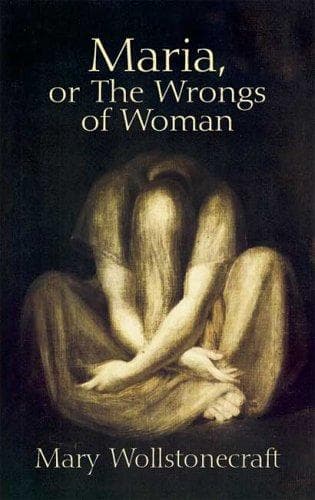
Maria; Or, The Wrongs of WomanWollstonecraft, Mary
General
Maria; Or, The Wrongs of Woman
Wollstonecraft, Mary
Autobiographical fiction; Feminist fiction; Women -- Fiction
But when she was told that no person, excepting the physician appointed
by her family, was to be permitted to see the lady at the end of the
gallery, she opened her keen eyes still wider, and uttered a—“hem!”
before she enquired—“Why?” She was briefly told, in reply, that the
malady was hereditary, and the fits not occurring but at very long and
irregular intervals, she must be carefully watched; for the length of
these lucid periods only rendered her more mischievous, when any
vexation or caprice brought on the paroxysm of phrensy.
Had her master trusted her, it is probable that neither pity nor
curiosity would have made her swerve from the straight line of her
interest; for she had suffered too much in her intercourse with
mankind, not to determine to look for support, rather to humouring
their passions, than courting their approbation by the integrity of her
conduct. A deadly blight had met her at the very threshold of
existence; and the wretchedness of her mother seemed a heavy weight
fastened on her innocent neck, to drag her down to perdition. She could
not heroically determine to succour an unfortunate; but, offended at
the bare supposition that she could be deceived with the same ease as a
common servant, she no longer curbed her curiosity; and, though she
never seriously fathomed her own intentions, she would sit, every
moment she could steal from observation, listening to the tale, which
Maria was eager to relate with all the persuasive eloquence of grief.
It is so cheering to see a human face, even if little of the divinity
of virtue beam in it, that Maria anxiously expected the return of the
attendant, as of a gleam of light to break the gloom of idleness.
Indulged sorrow, she perceived, must blunt or sharpen the faculties to
the two opposite extremes; producing stupidity, the moping melancholy
of indolence; or the restless activity of a disturbed imagination. She
sunk into one state, after being fatigued by the other: till the want
of occupation became even more painful than the actual pressure or
apprehension of sorrow; and the confinement that froze her into a nook
of existence, with an unvaried prospect before her, the most
insupportable of evils. The lamp of life seemed to be spending itself
to chase the vapours of a dungeon which no art could dissipate.—And to
what purpose did she rally all her energy?—Was not the world a vast
prison, and women born slaves?
Public-domain text, read in full here on John Shaqi.
Reviews
Reviews
No reviews yet
Be the first to share your thoughts on this work.
Join the Discussion
Join the discussion
Sign in to leave a comment or review.
Sign InorCreate an account