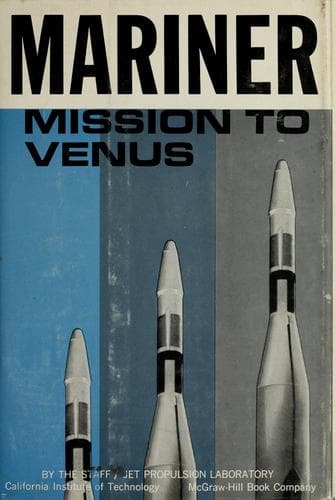
Mariner Mission to VenusJet Propulsion Laboratory (U.S.)
Science
Mariner Mission to Venus
Jet Propulsion Laboratory (U.S.)
Project Mariner (U.S.)
The TPS equipment included FM discriminators, a code translator, a
device for converting data from analog to digital form, and
magnetic-tape recorders. Basically, the equipment accepted the digital
outputs from the tape units, the analog-to-digital converter, and the
code translator and put them in digital tape format for the computer
input.
As the launch operation started on August 27, the powered-flight portion
of the space trajectories program was run at launch minus 5 minutes (L
minus 5) and was repeated several times because of holds at AMR. The
orbit determination program was run at lift-off to calculate the first
orbit predictions used for aiding the DSIF in finding the spacecraft in
flight.
During the 12 hours following launch, both C and D Stations performed
parallel computations on tracking data. Station D discontinued space
flight operations at L plus 12 hours and resumed at the beginning of the
midcourse maneuver phase.
Tracking data processing and midcourse maneuver studies were conducted
daily until the midcourse maneuver was performed at L plus eight days.
For the following 97 days, tracking data were processed once each week
for orbit determination. Starting three days before the encounter,
tracking data were processed daily until the beginning of the encounter
phase.
Tracking data processing was conducted in near-real time throughout
encounter day, and daily for two days thereafter. For these three days,
tracking data were handled in Station D in order to permit exclusive use
of Station C for telemetry data processing and analysis. After this
three-day period, including the encounter, Station C processed the
tracking data every sixth day until the mission terminated on L plus 129
days.
Telemetry data were processed in a different manner. Following the
launch, DSIF Station 5 at South Africa received the telemetry signal
first, demodulated it, and put it in the proper format for teletype
transmission to JPL. The other DSIF stations followed in sequence as the
spacecraft was heard in other parts of the world. For two days after
launch, the computers processed telemetry data as required by the
Spacecraft Data Analysis Team.
During those periods when the large computer was processing tracking
data, a secondary unit supplied quick-look data in near-real time. When
Goldstone was listening to the spacecraft, quick-look data were
processed in real time, using the high-speed data line direct to the
Central Computing Facility.
Public-domain text, read in full here on John Shaqi.
Reviews
Reviews
No reviews yet
Be the first to share your thoughts on this work.
Join the Discussion
Join the discussion
Sign in to leave a comment or review.
Sign InorCreate an account