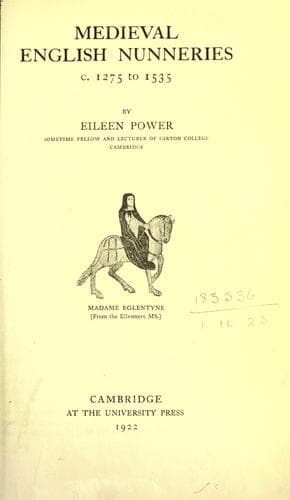
Medieval English Nunneries c. 1275 to 1535Power, Eileen
History
Medieval English Nunneries c. 1275 to 1535
Power, Eileen
Convents -- England; Monastic and religious life of women -- History
Many of the widows who took the veil were, however, less romantic figures.
Although their presence as secular boarders was discouraged, because it
brought too much of the world within cloister walls, those who desired to
make regular profession were willingly received, the more so as they often
brought a substantial dower with them. Thus when Margaret, Countess of
Ulster, assumed the habit at Campsey in 1347, she took with her, by
licence of the Crown, the issues of all her lands and rents in England for
a year after her admission, and after that date 200 marks yearly were to
be paid for her sustenance[145]. Such widows often enjoyed a respect
consonant with their former position in society and not infrequently
became heads of their houses. Katherine de Ingham and Eleanor Lady Scrope
both entered the Minories in their widowhood and eventually became
abbesses[146]. But it does not need much imagination, nor an unduly
cynical temperament, to guess that this element of convent life must
occasionally have been a disturbing one. The conventual atmosphere did not
always succeed in killing the profaner passions of the soul; and the
advent of an opinionated widow, ripe in the experience of all those things
which her sisters had never known, with the aplomb of one who had long
enjoyed an honoured position as wife and mother and lady of the manor,
must at times have caused a flutter among the doves; such a situation, for
instance, as Bishop Cobham found at Wroxall when he visited it in
1323[147]. Isabel Lady Clinton of Maxstoke, widow of the patron of the
house, had retired thither and had evidently taken with her a not too
modest opinion of her own importance. She found it impossible to forget
that she was a Clinton and to realise that she, who had in time gone by
given her easy patronage to the nuns and lodged with them when she would,
was now a simple sister among them. Was she to submit to the rule of
Prioress Agnes of Alesbury, she without whose goodwill Prioress Agnes had
never been appointed? Was she to listen meekly to chiding in the dorter,
and in the frater to bear with sulks? Impossible. How she comported
herself we know not, but the bishop "found grave discord existing between
the Prioress and dame Isabel Clinton, some of the sisters adhering to one
and some to the other." Evidently a battle royal. The bishop, poor man,
did his best. He enjoined peace and concord among the inmates; the sisters
were to treat the prioress with reverence and obedience; those who had
rebelled against her were to desist and the prioress was to behave
amicably to all in frater, dorter, and elsewhere. And so my lord went his
way. He may have known the pertinacity of the late patroness; and it was
perhaps with resignation and without surprise that he confirmed her
election as prioress on the death of the harassed Agnes.
Public-domain text, read in full here on John Shaqi.
Reviews
Reviews
No reviews yet
Be the first to share your thoughts on this work.
Join the Discussion
Join the discussion
Sign in to leave a comment or review.
Sign InorCreate an account