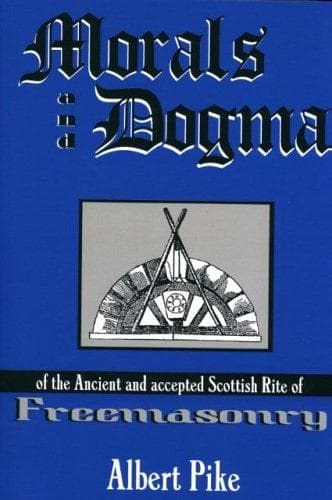
Morals and Dogma of the Ancient and Accepted Scottish Rite of Freemasonry — John Shaqi
Morals and Dogma of the Ancient and Accepted Scottish Rite of FreemasonryPike, Albert
Religion
Morals and Dogma of the Ancient and Accepted Scottish Rite of Freemasonry
Pike, Albert
Freemasons
Christianity, it is said, begins from the burning of the false gods by
the people themselves. Education begins with the burning of our
intellectual and moral idols: our prejudices, notions, conceits, our
worthless or ignoble purposes. Especially it is necessary to shake off
the love of worldly gain. With Freedom comes the longing for worldly
advancement. In that race men are ever falling, rising, running, and
falling again. The lust for wealth and the abject dread of poverty delve
the furrows on many a noble brow. The gambler grows old as he watches
the chances. Lawful hazard drives Youth away before its time; and this
Youth draws heavy bills of exchange on Age. Men live, like the engines,
at high pressure, a hundred years in a hundred months; the ledger
becomes the Bible, and the day-book the Book of the Morning Prayer.
Hence flow overreachings and sharp practice, heartless traffic in which
the capitalist buys profit with the lives of the laborers, speculations
that coin a nation's agonies into wealth, and all the other devilish
enginery of Mammon. This, and greed for office, are the two columns at
the entrance to the Temple of Moloch. It is doubtful whether the latter,
blossoming in falsehood, trickery, and fraud, is not even more
pernicious than the former. At all events they are twins, and fitly
mated; and as either gains control of the unfortunate subject, his soul
withers away and decays, and at last dies out. The souls of half the
human race leave them long before they die. The two greeds are twin
plagues of the leprosy, and make the man unclean; and whenever they
break out they spread until "they cover all the skin of him that hath
the plague, from his head even to his foot." Even the raw flesh of the
heart becomes unclean with it.
* * * * *
Alexander of Macedon has left a saying behind him which has survived his
conquests: _"Nothing is nobler than work."_ Work only can keep even
kings respectable. And when a king is a king indeed, it is an honorable
office to give tone to the manners and morals of a nation; to set the
example of virtuous conduct, and restore in spirit the old schools of
chivalry, in which the young manhood may be nurtured to real greatness.
Work and wages _will_ go together in men's minds, in the most royal
institutions. We must ever come to the idea of real work. The rest that
follows labor should be sweeter than the rest which follows rest.
Public-domain text, read in full here on John Shaqi.
Reviews
Reviews
No reviews yet
Be the first to share your thoughts on this work.
Join the Discussion
Join the discussion
Sign in to leave a comment or review.
Sign InorCreate an account