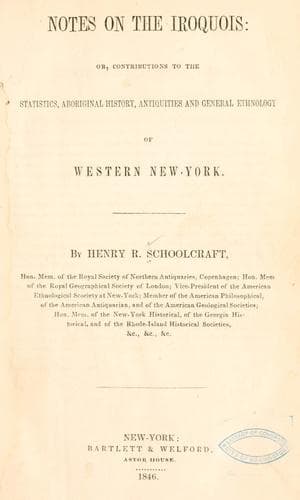
Notes on the Iroquois: or, Contributions to the Statistics, Aboriginal History, Antiquities and General Ethnology of Western New-YorkSchoolcraft, Henry Rowe
History
Notes on the Iroquois: or, Contributions to the Statistics, Aboriginal History, Antiquities and General Ethnology of Western New-York
Schoolcraft, Henry Rowe
Indians of North America -- New York (State); Iroquois Indians
Not a few persons amongst the Onondagas and Tuscaroras, and the
Tonewandas and other bands of Senecas, living in or contiguous to the
principal wheat growing counties, labor during the harvest season as
reapers and cradlers, for skill and ability in which occupations they
bear a high reputation, and receive good wages in cash. There are a
few engaged some parts of the year, as mariners on the lakes. It will
be sufficient to denote these varied forms of incipient labor and
strength of muscle and personal energy among these tribes, which it
was, however, impracticable to bring into the tables.
Individual character vindicates its claims to wealth and distinction
among these tribes in as marked a manner as among any people in the
world. Industry, capacity and integrity, are strongly marked on the
character and manners of numbers in each of the tribes. The art of
speaking, and a facility in grasping objects of thought, and in the
transaction of business, separate and distinguish persons as fully as
physical traits do their faces. And it is to be observed that these
intellectual traits run very much in certain families. That there are
numbers, on the contrary, who are drones in the political hive, who do
not labor, or labor very little; others who are intemperate; others
who neither work nor own land, or would long remain proprietors of
them, were new divisions and appropriations made, and all of whom are
a burden and drawback upon the industrious and producing classes, it
requires little observation to show. Admitting what reforms teaching
and example may accomplish among these, it is yet certain that of this
number there are many who do not assimilate, or appear to constitute
material for assimilation, in tastes and habits with the mass, nor
appear likely to incorporate with them in any practical shape where
they now reside, in their advances in agriculture, government and
morals. The hunter habit in these persons is yet strong, but having
nothing to stimulate it, they appear loth to embrace other modes of
subsistence. Others stand aloof from labor, or at least all active
and efficient labor, from a restless desire of change, or ambition
to do something else than plough and raise stock; or from ill-luck,
penury, or other motives. The proportion of the population who thus
stand still and do not advance in civil polity, are a strong draw-back
on the rest. It is conceived to be a pertinent question whether this
class of the population would not find a better theatre for their
progress and development by migrating to the west, where the general
government still possess unappropriated territory at their disposal.
It is believed by many that their migration would result in benefit
to both parties. The question is one which has been often discussed
by them in council, and is not yet, I should judge, fully settled.
A point of approach for the Iroquois has already been formed in the
Indian territory by the Senecas and Shawnees from Sandusky in Ohio,
Public-domain text, read in full here on John Shaqi.
Reviews
Reviews
No reviews yet
Be the first to share your thoughts on this work.
Join the Discussion
Join the discussion
Sign in to leave a comment or review.
Sign InorCreate an account