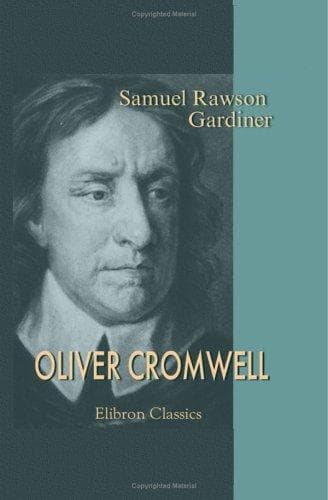
Cromwell, Oliver, 1599-1658; Great Britain -- History -- Commonwealth and Protectorate, 1649-1660
Cromwell once more called on the local commanders to gather their
forces, not for an attack on Newark, but for a march into Yorkshire to
the relief of the Fairfaxes. Early in June some 6,000 men were gathered
at Nottingham. Once more the effort came to nothing. The commanders
excused themselves from moving, on the plea that the Fairfaxes did
not need their help. One of their number, the younger Hotham, was
detected in an intrigue with the enemy. Mainly by Cromwell's energy
he was seized, and ultimately, together with his father, was sent
to London, where they were both executed as traitors. In Yorkshire
the tide was running against the Fairfaxes. On June 30 they were
defeated at Adwalton Moor. The whole of the West Riding was lost, and
the commanders forced to take refuge in Hull. Newcastle, with his
victorious army, would soon be heard of in Lincolnshire, where Lord
Willoughby of Parham had lately seized Gainsborough for Parliament.
Among the troops ordered to maintain this advanced position was
Cromwell's regiment, and on July 28 that regiment defeated a strong
body of Royalist horse near Gainsborough. Later in the day news was
brought that a force of the enemy was approaching from the North.
Cromwell, whose cavalry was supported by a body of foot, went out to
meet it, only to find himself face to face with Newcastle's whole
army. Though the Parliamentary infantry took flight at once, the horse
retired by sections, showing a bold front, and regaining the town with
the loss of only two men. This cavalry, which combined the dash of
Grantham with the discipline of Gainsborough, spelt victory for the
Parliamentary side.
Yet, at the moment, the prospect was gloomy enough. On July 30
Gainsborough surrendered, and unless Cromwell's forces could be
augmented, there was little to intervene between Newcastle's army and
London. "It's no longer disputing," wrote Cromwell to the Committee at
Cambridge, "but out instantly all you can. Almost all our foot have
quitted Stamford; there is nothing to interrupt an enemy but our horse
that is considerable. You must act lively. Do it without distraction.
Neglect no means."
Public-domain text, read in full here on John Shaqi.
Reviews
Reviews
No reviews yet
Be the first to share your thoughts on this work.
Join the Discussion
Join the discussion
Sign in to leave a comment or review.
Sign InorCreate an account