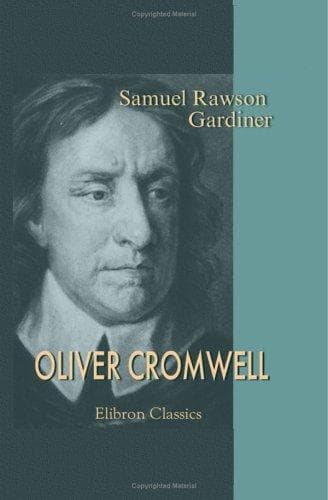
Cromwell, Oliver, 1599-1658; Great Britain -- History -- Commonwealth and Protectorate, 1649-1660
With the surrender of Astley at Stow-on-the-Wold a new situation was
created. The time had arrived to which Cromwell had looked forward
after the second battle of Newbury, the time when Charles--no longer
having any hope of dictating terms to his enemies--would probably be
ready to accept some compromise which might give to Cromwell and the
Independent party that religious freedom which the Presbyterians at
Westminster found it so hard to concede. It did not need a tithe of
Cromwell's sagacity to convince him that a settlement would have a far
greater chance of proving durable if it were honestly accepted by the
King than if it were not. Yet it did not augur well for a settlement
that Charles, knowing that if he remained at Oxford a few weeks would
see him a prisoner in the hands of the army, rode off towards Newark,
which was at that time besieged by the Scots, and on May 5, 1646, gave
himself up to the Scottish commander at Southwell. The Scots having
extracted from him an order to the Governor of Newark to surrender the
place, marched off, with him in their train, to Newcastle, where they
would be the better able to maintain their position against any attack
by the army of the English Parliament. If Charles expected to make the
Scots his tools, he was soon undeceived. He was treated virtually as a
prisoner under honourable restraint, and given to understand that he
was expected to establish Presbyterianism in England.
A few days before Charles left Oxford, Cromwell had come up to
Westminster to take part in the discussions on a settlement which
were certain to follow on the close of the war. He saw his views
better supported in the House of Commons than they had been when he
was last within its walls. A series of elections had taken place to
fill the seats vacated by the expulsion of Royalists, and the majority
of the recruiters--as the new members were called--were determined
Independents, that is to say, favourers of religious liberty within the
bounds of Puritanism. Amongst them were Ireton, who had commanded the
left wing at Naseby, and who was soon to become Cromwell's son-in-law;
Fleetwood, now a colonel in the New Model Army, Blake, the defender
of Taunton, hereafter to be the great admiral of the Commonwealth
and Protectorate, together with other notables of the army. Yet the
Presbyterians still kept a majority in the House. They had already,
on March 14, secured the passing of an ordinance establishing
Presbyterianism in England, though it was to differ from the Scottish
system in that the Church was placed, in the last resort, under the
supreme authority of Parliament. An English Presbyterian could not,
even when we needed Scottish help, conform himself entirely to the
Scottish model. It is true that the ordinance was only very partially
carried out, but there can be little doubt that it would have been
more generally obeyed if the negotiations, which the Parliamentary
Public-domain text, read in full here on John Shaqi.
Reviews
Reviews
No reviews yet
Be the first to share your thoughts on this work.
Join the Discussion
Join the discussion
Sign in to leave a comment or review.
Sign InorCreate an account