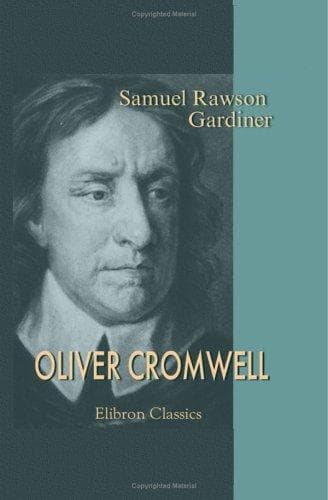
Cromwell, Oliver, 1599-1658; Great Britain -- History -- Commonwealth and Protectorate, 1649-1660
The army marched, and the City at once made its submission. The bare
facts of the case told heavily against Cromwell in the eyes of those
whose schemes he had frustrated. In May he had protested that the army
would disband at a word from Parliament, and had renounced all thought
of bringing military force to control affairs of State. In June he had
made himself the leader of the army to disperse a force which was being
raised by the orders of Parliament. The very words in which he, writing
in the army's name, had announced his decision must also have told
against him. It would have been far better if he had simply announced
that the new circumstances which had arisen had forced upon him the
conviction that he had gone too far and had driven him to acknowledge
to himself and others that obedience to a Parliament might have its
limits, and that those limits had now been reached. The line, it would
have been easy to say, must be drawn when Parliament was preparing
civil war, not in defence of the rights of Englishmen, but to impose
upon the country a system alien to its habits with the assistance of
a Scottish army. Unhappily it was in Cromwell's nature to meet the
difficulty in another way. When most inconsistent he loved to persuade
himself that he had always been consistent, and in taking refuge in
the statement that the army put forward its claim to be heard as
Englishmen rather than as soldiers, he committed himself to a doctrine
so manifestly absurd that it could only be received with a smile of
contemptuous disbelief. Cromwell, in fact, stood at the parting of
the ways. For him there was but one choice--the choice between entire
submission to Parliamentary authority and the establishment of military
control. No wonder that he instinctively shrunk from acknowledging,
even to himself, the enormous importance of the step he was taking:
still less wonder that he did not recognise in advance the unavoidable
consequences of the choice--the temporary success which follows in the
wake of superior force, and the ultimate downfall of the cause which
owes its acceptance to such means.
Public-domain text, read in full here on John Shaqi.
Reviews
Reviews
No reviews yet
Be the first to share your thoughts on this work.
Join the Discussion
Join the discussion
Sign in to leave a comment or review.
Sign InorCreate an account