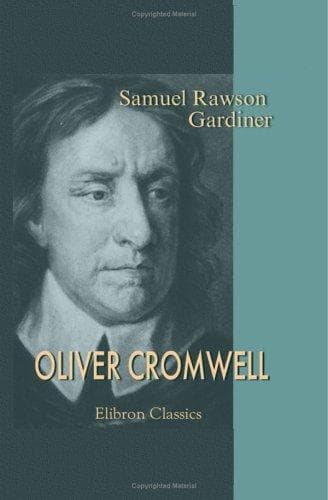
Cromwell, Oliver, 1599-1658; Great Britain -- History -- Commonwealth and Protectorate, 1649-1660
The immediate results developed themselves without long delay. The
army, doing its best to carry on the work of violence under legal
forms, proceeded to charge eleven of the leading Presbyterian members
with attempting to throw the kingdom into fresh war, as well as with
other misdemeanours. The accused persons retaliated by pressing
forward their scheme for gaining the assistance of a Scottish army,
and for bringing up English forces devoted to their cause against the
army under Fairfax and Cromwell. Fairfax and Cromwell were too near
the centre of affairs to be so easily baffled by specious words. On
June 26 a menacing letter from the army made the eleven members feel
that their position was untenable, and voluntarily--so at least they
asserted--they withdrew from their seats in Parliament. Who could now
doubt that--under the thinnest of veils--the army had taken the supreme
control of the government into its hands?
CHAPTER III.
THE NEW MODEL ARMY AND THE KING.
In his desire to escape from the undoubted evils of military
government, Cromwell had the best part of the army behind him. Nor
did it, at the moment, appear very difficult to attain this object by
coming to terms with the King, especially as the army leaders were
prepared to make concessions to Charles's religious scruples. Claiming
freedom for themselves in matters of conscience, they were ready to
concede it in return, and, for the first time since he had ridden
out of Oxford, Charles was allowed to receive the ministrations of
his own chaplains, and to join in offering prayer and praise in the
familiar language of the Prayer Book of the Church. It was a long step
towards the settlement of that religious question which had created so
impassable a gulf between the King and the Presbyterians.
The constitutional question remained to be discussed, and the burden
of framing terms to bind the King fell upon Cromwell's son-in-law,
Ireton, rather than upon Cromwell himself. Cromwell indeed would never
have consented to see Charles replaced in the old position, but he
was unskilled in constitutional niceties, and he left such details to
others. The main difficulty of the situation was not long in revealing
itself. Charles, who had been removed to Windsor, talked as if the
dispute between the Houses and the soldiers might be referred to his
decision. "Sir," replied Ireton, "you have an intention to be the
arbitrator between Parliament and us; and we mean to be it between
your Majesty and Parliament." It was not that there was any definite
constitutional idea in Charles's mind. With him it was rather a matter
of feeling than of reason that he could occupy no other place in the
State than that which tradition confirmed by his own experience had
assigned to the man who wore the crown. For him as for another as weak
for all purposes of government, as richly endowed with the artistic
temperament as himself,
Public-domain text, read in full here on John Shaqi.
Reviews
Reviews
No reviews yet
Be the first to share your thoughts on this work.
Join the Discussion
Join the discussion
Sign in to leave a comment or review.
Sign InorCreate an account