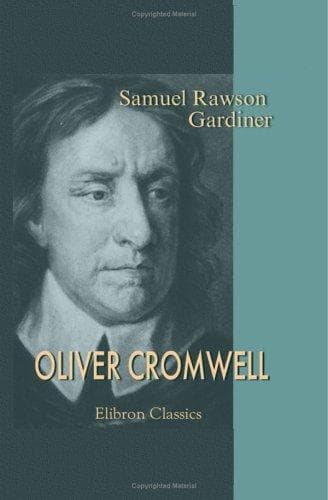
Cromwell, Oliver, 1599-1658; Great Britain -- History -- Commonwealth and Protectorate, 1649-1660
When, in 1628, Cromwell took his seat in the House of Commons he
would be sure of a good reception as a cousin of Hampden. There is,
however, nothing to surprise us in his silence during the eventful
debates on the Petition of Right. He was no orator by nature, though
he could express himself forcibly when he felt deeply, and at this
time, and indeed during the whole of his life, he felt more deeply
on religious than on political questions. The House, in its second
session held in 1629, was occupied during the greater portion of its
time with religious questions, and it was then that Cromwell made his
first speech, if so short an utterance can be dignified by that name.
"Dr. Beard," he informed the House, "told him that one Dr. Alablaster
did at the Spital preach in a sermon tenets of Popery, and Beard being
to repeat the same, the now Bishop of Winton, then Bishop of Lincoln,
did send for Dr. Beard, and charged him as his diocesan, not to preach
any doctrine contrary to that which Alablaster had delivered, and
when Beard did, by the advice of Bishop Felton, preach against Dr.
Alablaster's sermon and person, Dr. Neile, now Bishop of Winton, did
reprehend him, the said Beard, for it."
The circumstances of the time give special biographical importance to
the opening of this window into Cromwell's mind. The strife between
the Puritan clergy and the Court prelates was waxing high. The latter,
whilst anxious to enforce discipline, and the external usages which,
though enjoined in the Prayer Book, had been neglected in many parts of
the country, were at the same time contending for a broader religious
teaching than that presented by Calvin's logic; but knowing that they
were in a comparatively small minority they, perhaps not unnaturally,
fell back on the protection of the King, who was in ecclesiastical
matters completely under the influence of Laud. The result of Charles's
consultations with such Bishops as were at hand had been the issue of
a Declaration which was prefixed to a new edition of the articles, and
is to be found in Prayer Books at the present day. The King's remedy
for disputes in the Church on predestination and such matters was to
impose silence on both parties, and it was in view of this policy
that Cromwell raked up an old story to show how at least twelve years
before, his old schoolmaster, Dr. Beard, had been forbidden to preach
any doctrine but that which the member for Huntingdon stigmatised
as Popish, and this too by a prelate who was now seeking, in a less
direct way, to impose silence on Puritan ministers. Other members of
Parliament had striven to oppose the ecclesiasticism of the Court by
the intolerant assertion that Calvinism alone was to be preached.
Cromwell did nothing of the kind. He did not even say that those who
upheld what he calls 'tenets of Popery' were to be silenced. He merely
asked that those who objected to them might be free to deliver their
testimony in public.
Public-domain text, read in full here on John Shaqi.
Reviews
Reviews
No reviews yet
Be the first to share your thoughts on this work.
Join the Discussion
Join the discussion
Sign in to leave a comment or review.
Sign InorCreate an account