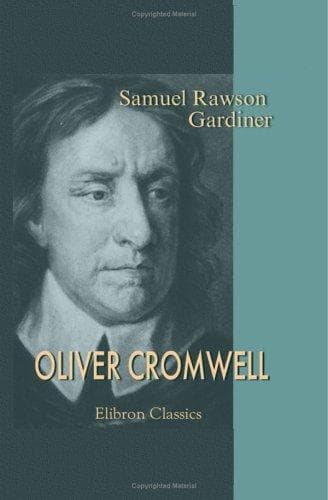
Cromwell, Oliver, 1599-1658; Great Britain -- History -- Commonwealth and Protectorate, 1649-1660
There is the germ here of his future liberal
policy as Lord Protector--the germ too of a wide difference of opinion
from those with whom he was at this time acting in concert.[A]
[A] My argument would obviously not stand if the remainder
of the speech printed in Rushworth were held to be
genuine. There is, however, good reason to know that it
is not (_Hist. of Eng._, 1603-1642, vii., 56, note).
Little as we know of Cromwell's proceedings during the eleven years in
which no Parliament sat, that little is significant. His interference
in temporal affairs was invariably on the side of the poor. In 1630
a new charter was granted to Huntingdon, conferring the government
of the town on a mayor and twelve aldermen appointed for life. To
this Cromwell raised no objection, taking no special delight in
representative institutions, but he protested against so much of the
charter as, by allowing the new corporation to deal at its pleasure
with the common property of the borough, left the holders of rights
of pasture at their mercy; and, heated by a sense of injustice to
his poorer neighbours, he spoke angrily on the matter to Barnard,
the new mayor. Cromwell was summoned before the council, with the
result that the Earl of Manchester, appointed to arbitrate, sustained
his objections, whilst Cromwell, having gained his point, apologised
for the roughness of his speech. It is not unlikely that it was in
consequence of this difference with the new governors of the town that
he shortly afterwards sold his property there, and removed to St.
Ives, where he established himself as a grazing farmer. Nor was he
less solicitous for the spiritual than for the temporal welfare of his
neighbours. Many Puritans were at this time attempting to lessen the
influence of the beneficed clergy, who were, in many places, opposed to
them, by raising sums for the payment of lecturers, who would preach
Puritan sermons without being bound to read prayers before them. The
earliest extant letter of Cromwell's was written in 1636 to a City
merchant, asking him to continue his subscription to the maintenance of
a certain Dr. Wells, 'a man of goodness and industry and ability to do
good every way'. "You know, Mr. Story," he adds, "to withdraw the pay
is to let fall the lecture, and who goeth to warfare at his own cost?"
Public-domain text, read in full here on John Shaqi.
Reviews
Reviews
No reviews yet
Be the first to share your thoughts on this work.
Join the Discussion
Join the discussion
Sign in to leave a comment or review.
Sign InorCreate an account