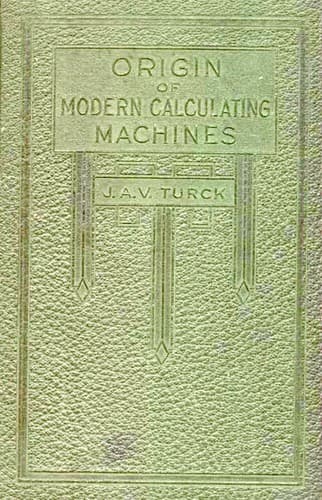
Origin of modern calculating machinesTurck, J. A. V.
History
Origin of modern calculating machines
Turck, J. A. V.
Calculators
As the reader has been carried along through the tangle of mechanical
efforts of the men who have racked their brains to produce means that
would relieve the burden of those who have to juggle with arithmetical
problems and masses of figures in the day’s accounting, there was one
phase of subject that has not been touched upon. While these inventors
were doing their best to benefit mankind and, without doubt, with the
thought of reaping a harvest for themselves, the public, who could have
been the prime beneficiary, did not hasten to avail themselves of the
opportunity.
[Sidenote: _Opposition to the use of machines for accounting_]
In the early days, when the key-driven calculator was marketed, and
later when the recording-adder was also placed on the market, the
efforts of the salesmen for each of these types of machines, in their
endeavor to interest possible purchasers, were met with anything but
enthusiasm. Of course, now and then a wide-awake businessman was
willing to be shown and would purchase, but ninety-nine out of the
hundred who really had use for a machine of either type could not at
that early date be awakened to the fact.
Although the calculator and the recording-adder are indispensable
factors in business today, and have served to improve the lot of the
bookkeeper and those employed in expert accounting in general, they met
with very strong opposition for the first few years from employers of
this class. It was strongly evident that the efforts of book-keepers
and counting-house clerks to prevent these machines entering their
department were inspired by the fear that it would displace their
services and interfere with their chance of a livelihood.
Again, men of this class, and even those in charge of large
departments, took the mere suggestion that they had use for a
calculator or recording-adder as an insult to their efficiency, and
would almost throw the salesman out. Others would very politely look
the machine over and tell the salesman what a wonderful machine it was,
but when asked to give the machine a trial, they would immediately back
up and say that they had absolutely no use for such a machine; whereas
possibly now the same department is using twenty-five to a hundred such
machines.
[Sidenote: _Banks more liberal in recognition_]
Of the two classes of machines, the recording, or listing machines, as
they are commonly called, although a later product, were the first to
sell in quantities that may be called large sales. This was probably
due to the fact that they were largely sold to the banks, who have
always been more liberal in recognizing the advantages of labor-saving
devices than any other class of business.
Public-domain text, read in full here on John Shaqi.
Reviews
Reviews
No reviews yet
Be the first to share your thoughts on this work.
Join the Discussion
Join the discussion
Sign in to leave a comment or review.
Sign InorCreate an account