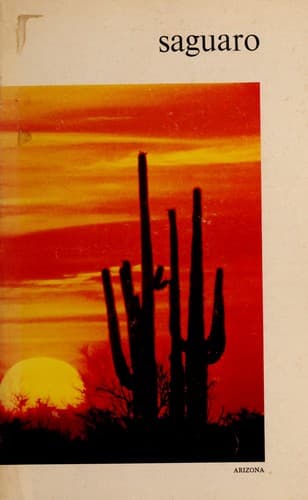
Desert ecology -- Arizona -- Saguaro National Park; Natural history -- Arizona -- Saguaro National Park
One of the handsome shrubs abundant in the high desert along the base of
Tanque Verde Ridge is the JOJOBA (ho-HOH-bah), or deernut. Its thick,
leathery, evergreen leaves are especially noticeable in winter and
furnish excellent browse for deer. The flowers are small and yellowish,
but the nutlike fruits are large and edible, although bitter. They were
eaten raw or parched by the Indians, and were pulverized by early-day
settlers for use as a coffee substitute.
Among the attractive flowering shrubs are the INDIGOBUSHES, of which
there are several species adapted to the desert environment. The local,
low-growing indigobushes are especially ornamental when covered with
masses of deep-blue flowers in spring.
Another small shrub, noticeable from February to May because of its
large, tassel-like pink-to-red blossoms and its fernlike leaves is
FAIRY-DUSTER. Deer browse on its delicate foliage.
The PAPER FLOWER, growing in dome-shaped clumps covered with yellow
flowers, sometimes blooms throughout the entire year. The petals bleach
and dry and may remain on the plant weeks after the blossoms have faded.
Quick to attract attention because of their apparent lack of foliage,
the JOINTFIRS, of which there are several desert species, grow in clumps
of harsh, stringy, yellow-green, erect stems. The skin or outer bark of
the stems performs the usual functions of leaves, which on these plants
have been reduced to scales. Small, fragrant, yellow blossom clusters,
appearing at the stem joints in spring, are visited by insects attracted
to their nectar.
_Ephemerals_
Every spring, after a winter of normal rainfall, parts of the
southwestern deserts are carpeted with a lush blanket of fast-growing
annual herbs and wildflowers—the early spring ephemerals. The monument
does not get massive displays, however, since it is lacking in the
species that make the best show. But it does have many annuals that are
beautiful individually or in small groups. Many of these “quickies” do
not have the characteristics of desert plants; some of them, in fact,
are part of the common vegetation of other climes where moisture is
plentiful and summer temperatures are much less severe.
What are these “foreign” plants doing in the desert, and how do they
survive? With its often frostfree winter climate and its normal
December-to-March rains, the desert presents in early spring ideal
growing weather for annuals that are able to compress a generation into
several months. Several hundred species of plants have taken advantage
of this situation.
Public-domain text, read in full here on John Shaqi.
Reviews
Reviews
No reviews yet
Be the first to share your thoughts on this work.
Join the Discussion
Join the discussion
Sign in to leave a comment or review.
Sign InorCreate an account