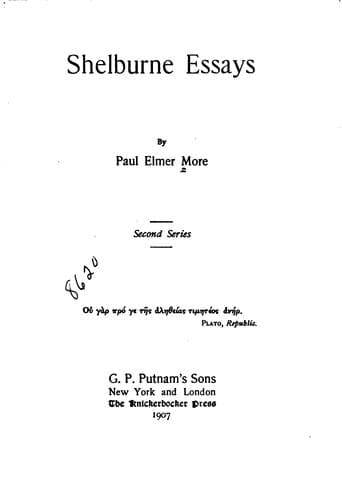
American literature -- History and criticism; English literature -- History and criticism
Balzac, in some respects the master novelist, was clearly conscious of
this aim of his art; and his _Comédie Humaine_ is a supreme effort to
grasp the whole range of French society. Nor would it be difficult in
the case of the greater English novelists to show that unwittingly--an
Englishman rarely if ever has the same knowledge of his art as a
Frenchman--they obeyed the same law. We admire Fielding and Smollett not
so much for their individual characterisations as for the joy we feel in
escaping our conventional timidity in the old-time tumultuous country
life of England, with all its rude strength and even its vulgarity. By a
natural contrast we read Jane Austen for her picture of rural security
and stability, and are glad to forget the vexations and uncertainties of
life's warfare in that gentle round of society, where greed and passion
are reduced to petty foibles, and where the errors of mankind only
furnish material for malicious but innocent satire. With Thackeray we
put on the veneer of artificial society which was the true idealism
inherited by him from the eighteenth century; and we move more freely
amidst that _gai monde_ because there runs through the story of it such
a biting satire of worldliness and snobbishness as flatters us with the
feeling of our own superiority. In Dickens we are carried into the very
opposite field of life, and for a while we move with those who are the
creatures of grotesque whims and emotions: caricatures we call his
people, but deep in our hearts we know that each of us longs at times to
be as humanity is in Dickens's world, the perfect and unreflecting
creature of his dearest whim--for this too is liberty. Thus it is that
the interest of the novel depends as much, or almost as much, on the
intrinsic value of the national life or phase of society reproduced as
on the skill of the writer. The prose author is in this respect far less
a free agent than the poet and far more the subject of his environment;
for he deals less with the unchanging laws of character and more with
what he perceives outwardly about him. It is this fact which leads many
readers to prefer the English novelists to the French, although the
latter are unquestionably the greater masters of their craft.
Public-domain text, read in full here on John Shaqi.
Reviews
Reviews
No reviews yet
Be the first to share your thoughts on this work.
Join the Discussion
Join the discussion
Sign in to leave a comment or review.
Sign InorCreate an account