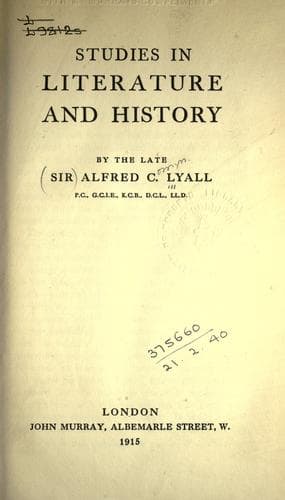
Studies in Literature and HistoryLyall, Alfred C., Sir
Religion
Studies in Literature and History
Lyall, Alfred C., Sir
English literature; History; Literature; Religion; Utilitarianism
'In London I passed houses and places, empty caskets now. The
streets, the shops are left, but all old friends are gone. The
bodies I cared for are in graves or dispersed. My old clubs that
lived so long and flourished so steadily are crumbled away. When I
took leave of our friend at Charing Cross, 'twas heavy unfeeling
rain, and I had nowhere to go ... not a sympathising house to turn
to in the great city. Never did the waters of heaven pour down on a
forlorner head. Yet I tried ten days at a sort of friend's house,
large and straggling; one of the individuals of my old long knot of
friends, card-players, and pleasant companions, that have tumbled
to pieces into dust and other things; and I got home convinced that
I was better to get to my hole in Enfield and hide like a sick cat
in my corner.'
We might, indeed, multiply indefinitely our quotations from the
correspondence of this literary period to show its sincerity, its
spontaneity, its uncommonness, the tone of intimate brotherhood and
natural unruly affection that pervades it everywhere. Nothing of the
kind has come down to us from the eighteenth century; and the last
fifty years of this century, so prolific in biographies and posthumous
publications of the papers of eminent men, go to prove that in the
general transformation of letter-writing these peculiar qualities have
almost, though not altogether, disappeared. Probably conversation has
suffered a like change; and we may ascribe it generally to a lowering
of the social temperature, to the habits of reserve, respectability,
and conventional self-restraint that in these days govern so largely
the intercourse of men. Something may be due to cautious expurgation
of passages which tell against the writer, or might offend modern
taste; yet in other respects contemporary editors have been
sufficiently indiscreet. And the growth of these habits, so
discouraging to free and fearless correspondence, may be partly
ascribed to the influence of journalism, which makes every subject
stale and sterile by incessantly threshing and tearing at it, and
which reviews biographies in a manner that acts as a solemn warning to
all men of mark that they take heed what they put into a private
letter. There are other causes, to which we may presently advert; but
it is quite clear that this fine art is undergoing certain
transmutations, and that on the whole it does not flourish quite so
vigorously as heretofore.
Public-domain text, read in full here on John Shaqi.
Reviews
Reviews
No reviews yet
Be the first to share your thoughts on this work.
Join the Discussion
Join the discussion
Sign in to leave a comment or review.
Sign InorCreate an account