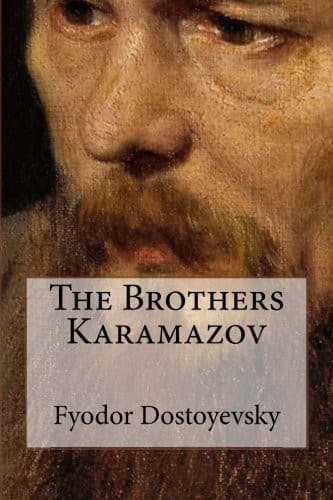
Brothers -- Fiction; Didactic fiction; Fathers and sons -- Fiction; Russia -- Social life and customs -- 1533-1917 -- Fiction
A monk was suddenly commanded by his elder to quit Athos, which he
loved as a sacred place and a haven of refuge, and to go first to
Jerusalem to do homage to the Holy Places and then to go to the north
to Siberia: “There is the place for thee and not here.” The monk,
overwhelmed with sorrow, went to the Œcumenical Patriarch at
Constantinople and besought him to release him from his obedience. But
the Patriarch replied that not only was he unable to release him, but
there was not and could not be on earth a power which could release him
except the elder who had himself laid that duty upon him. In this way
the elders are endowed in certain cases with unbounded and inexplicable
authority. That is why in many of our monasteries the institution was
at first resisted almost to persecution. Meantime the elders
immediately began to be highly esteemed among the people. Masses of the
ignorant people as well as men of distinction flocked, for instance, to
the elders of our monastery to confess their doubts, their sins, and
their sufferings, and ask for counsel and admonition. Seeing this, the
opponents of the elders declared that the sacrament of confession was
being arbitrarily and frivolously degraded, though the continual
opening of the heart to the elder by the monk or the layman had nothing
of the character of the sacrament. In the end, however, the institution
of elders has been retained and is becoming established in Russian
monasteries. It is true, perhaps, that this instrument which had stood
the test of a thousand years for the moral regeneration of a man from
slavery to freedom and to moral perfectibility may be a two-edged
weapon and it may lead some not to humility and complete self-control
but to the most Satanic pride, that is, to bondage and not to freedom.
The elder Zossima was sixty-five. He came of a family of landowners,
had been in the army in early youth, and served in the Caucasus as an
officer. He had, no doubt, impressed Alyosha by some peculiar quality
of his soul. Alyosha lived in the cell of the elder, who was very fond
of him and let him wait upon him. It must be noted that Alyosha was
bound by no obligation and could go where he pleased and be absent for
whole days. Though he wore the monastic dress it was voluntarily, not
to be different from others. No doubt he liked to do so. Possibly his
youthful imagination was deeply stirred by the power and fame of his
elder. It was said that so many people had for years past come to
confess their sins to Father Zossima and to entreat him for words of
advice and healing, that he had acquired the keenest intuition and
could tell from an unknown face what a new-comer wanted, and what was
the suffering on his conscience. He sometimes astounded and almost
alarmed his visitors by his knowledge of their secrets before they had
spoken a word.
Public-domain text, read in full here on John Shaqi.
Reviews
Reviews
No reviews yet
Be the first to share your thoughts on this work.
Join the Discussion
Join the discussion
Sign in to leave a comment or review.
Sign InorCreate an account