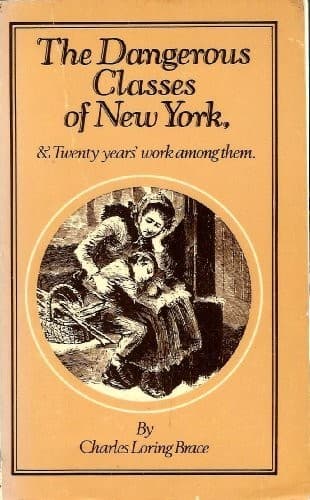
The Dangerous Classes of New York, and Twenty Years' Work Among ThemBrace, Charles Loring
History
The Dangerous Classes of New York, and Twenty Years' Work Among Them
Brace, Charles Loring
Child welfare -- New York (State) -- New York; New York (N.Y.) -- Social conditions; Poor -- New York (State) -- New York
It is said that these working-girls, seeing such fine dresses about
them, and learning many useless accomplishments, have become indifferent
to steady hand-labor, and have sought in vice for the luxuries which
they have first learned to know in the public schools. My own
observation, however, leads me to doubt whether this occurs, unless as
an exceptional fact. The influence of discipline and regular instruction
is against the style of character which makes the prostitute. Where
there is a habit of work, there are seldom the laziness and
shiftlessness which especially cause or stimulate sexual vice. Some
working-girls do, no doubt, become discontented with their former
condition, and some rise to a much higher, while some fall; but this
happens everywhere in the United States, and is not to be traced
especially to the influence of our Free Schools.
We have spoken of the greater tendency of large cities, as compared with
villages, in breaking up vicious families. There is another advantage of
cities in this matter. The especial virtue of a village community is the
self-respect and personal independence of its members. No benefits of
charity or benevolent assistance and dependence could ever outweigh
this. But this very virtue tends to keep a wicked or idle family in its
present condition. The neighbors are not in the habit of interfering
with it; no one advises or warns it. The children grow up as other
people's children do, in the way the parents prefer; there is no
machinery of charity to lift them out of the slime; and if any of their
wealthier neighbors, from motives of benevolence, visited the house, and
attempted to improve or educate the family, the effort would be resented
or misconstrued. The whole family become a kind of _pariahs_; they are
morally tabooed, and grow up in a vicious atmosphere of their own, and
really come out much worse than a similar family in the city. This
phenomenon is only a natural effect of the best virtues of the rural
community.
In a large town, on the other hand, there exist machinery and
organization through which benevolent and religious persons can approach
such families, and their good intentions not be suspected or resented.
The poor people themselves are not so independent, and accept advice or
warning more readily; they are not so stamped in public repute with a
bad name; less is known of them, and the children, under new influences,
break off from the vicious career of their parents, and grow up as
honest and industrious persons. Moreover, the existence of so much
charitable organization in the cities brings the best talent and
character of the fortunate classes to bear directly on the unfortunate,
far more than is the fact in villages.
CHAPTER V.
THE CAUSES OF CRIME.
OVERCROWDING.
Public-domain text, read in full here on John Shaqi.
Reviews
Reviews
No reviews yet
Be the first to share your thoughts on this work.
Join the Discussion
Join the discussion
Sign in to leave a comment or review.
Sign InorCreate an account