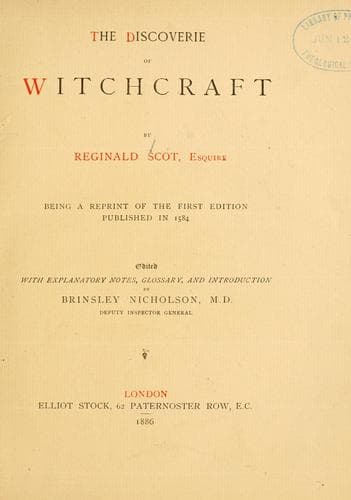
Demonology -- Early works to 1800; Magic -- Early works to 1800; Witchcraft -- Early works to 1800
limites.” Alas, this man of great learning and knowledge seems to have
been none other than that otherwise light of the English Church, the
great, good, and pious Bishop Jewel, who, having returned from a forced
residence abroad, was speedily promoted by her Majesty, and in a sermon
preached before her, in 1572, brought in the subject as follows:—
“Heere perhaps some man will replie, that witches, and conjurers often
times chase away one Divell by the meane of another. Possible it is so;
but that is wrought, not by power, but by Collusion of the Divels. For
one Divell, the better to attaine his purpose, will give place, and
make as though he stood in awe of another Divell. And by the way to
touch but a word or two of this matter for that the horrible using of
your poore subjects inforceth thereunto. It may please your Grace to
understand, that this kind of people, I meenes witches and sorcerers,
within these few last yeeres, are marvellously increased within this
your Grace’s realme. These eies have seene most evident and manifest
marks of their wickednesse. Your Grace’s subjects pine away even unto
the death, their collour fadeth, their flesh rotteth, their speech is
benummed, their senses are bereft.”
“Wherefore, your poore subjects most humble petition unto your
Highnesse, is, that the lawes touching such malefactours, may be put in
due execution. For the shole of them is great, their doings horrible,
their malice intollerable, the examples most miserable. And I pray God,
they never practise further, then upon the subject. But this only by
the way, these be the scholers of Beelzebub the chief captaine of the
Divels.”
The plantings of the Queen in the commissions of her Justices thus
instigated and encouraged, produced an abundant crop. According to
the Dedications of Scot, Sir Roger Manwood, Lord Chief Baron of the
Exchequer, had had “in these causes such experience”, _A_ ii. v., while
Sir Thomas Scot, as Justice of the Peace, had also had “manie poore
old women convented before him for ... witchcraft”, _A._ vi. Various
booklets also, presently to be spoken of more at large, excited still
more the imaginations of a credulous people, and it had been supposed,
before Scot wrote, as will be seen on p. 473, and in my note on that
page, that the Queen’s person had been aimed at in that way.
Public-domain text, read in full here on John Shaqi.
Reviews
Reviews
No reviews yet
Be the first to share your thoughts on this work.
Join the Discussion
Join the discussion
Sign in to leave a comment or review.
Sign InorCreate an account