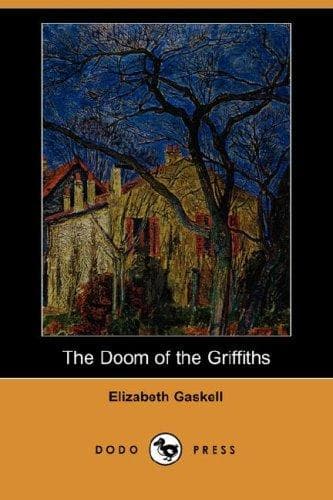
The Doom of the GriffithsGaskell, Elizabeth Cleghorn
General
The Doom of the Griffiths
Gaskell, Elizabeth Cleghorn
England -- Social life and customs -- 19th century -- Fiction; Horror tales, English
He would have added some apology for the long concealment of his
marriage; have appealed to his father’s forgiveness; but the foam flew
from Squire Owen’s lips as he burst forth with invective against Nest:—
“You have married her! It is as they told me! Married Nest Pritchard yr
buten! And you stand there as if you had not disgraced yourself for ever
and ever with your accursed wiving! And the fair harlot sits there, in
her mocking modesty, practising the mimming airs that will become her
state as future Lady of Bodowen. But I will move heaven and earth before
that false woman darken the doors of my father’s house as mistress!”
All this was said with such rapidity that Owen had no time for the words
that thronged to his lips. “Father!” (he burst forth at length) “Father,
whosoever told you that Nest Pritchard was a harlot told you a lie as
false as hell! Ay! a lie as false as hell!” he added, in a voice of
thunder, while he advanced a step or two nearer to the Squire. And then,
in a lower tone, he said—
“She is as pure as your own wife; nay, God help me! as the dear, precious
mother who brought me forth, and then left me—with no refuge in a
mother’s heart—to struggle on through life alone. I tell you Nest is as
pure as that dear, dead mother!”
“Fool—poor fool!”
At this moment the child—the little Owen—who had kept gazing from one
angry countenance to the other, and with earnest look, trying to
understand what had brought the fierce glare into the face where till now
he had read nothing but love, in some way attracted the Squire’s
attention, and increased his wrath.
“Yes,” he continued, “poor, weak fool that you are, hugging the child of
another as if it were your own offspring!” Owen involuntarily caressed
the affrighted child, and half smiled at the implication of his father’s
words. This the Squire perceived, and raising his voice to a scream of
rage, he went on:
“I bid you, if you call yourself my son, to cast away that miserable,
shameless woman’s offspring; cast it away this instant—this instant!”
In this ungovernable rage, seeing that Owen was far from complying with
his command, he snatched the poor infant from the loving arms that held
it, and throwing it to his mother, left the house inarticulate with fury.
Nest—who had been pale and still as marble during this terrible dialogue,
looking on and listening as if fascinated by the words that smote her
heart—opened her arms to receive and cherish her precious babe; but the
boy was not destined to reach the white refuge of her breast. The
furious action of the Squire had been almost without aim, and the infant
fell against the sharp edge of the dresser down on to the stone floor.
Public-domain text, read in full here on John Shaqi.
Reviews
Reviews
No reviews yet
Be the first to share your thoughts on this work.
Join the Discussion
Join the discussion
Sign in to leave a comment or review.
Sign InorCreate an account