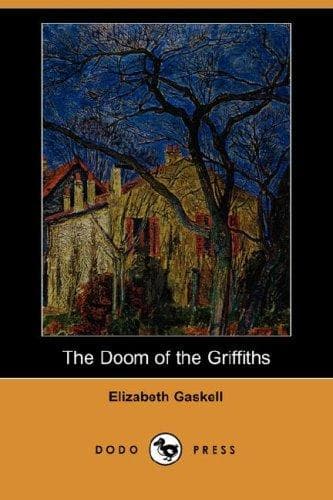
The Doom of the GriffithsGaskell, Elizabeth Cleghorn
General
The Doom of the Griffiths
Gaskell, Elizabeth Cleghorn
England -- Social life and customs -- 19th century -- Fiction; Horror tales, English
Owen sprang up to take the child, but he lay so still, so motionless,
that the awe of death came over the father, and he stooped down to gaze
more closely. At that moment, the upturned, filmy eyes rolled
convulsively—a spasm passed along the body—and the lips, yet warm with
kissing, quivered into everlasting rest.
A word from her husband told Nest all. She slid down from her seat, and
lay by her little son as corpse-like as he, unheeding all the agonizing
endearments and passionate adjurations of her husband. And that poor,
desolate husband and father! Scarce one little quarter of an hour, and
he had been so blessed in his consciousness of love! the bright promise
of many years on his infant’s face, and the new, fresh soul beaming forth
in its awakened intelligence. And there it was; the little clay image,
that would never more gladden up at the sight of him, nor stretch forth
to meet his embrace; whose inarticulate, yet most eloquent cooings might
haunt him in his dreams, but would never more be heard in waking life
again! And by the dead babe, almost as utterly insensate, the poor
mother had fallen in a merciful faint—the slandered, heart-pierced Nest!
Owen struggled against the sickness that came over him, and busied
himself in vain attempts at her restoration.
It was now near noon-day, and Ellis Pritchard came home, little dreaming
of the sight that awaited him; but though stunned, he was able to take
more effectual measures for his poor daughter’s recovery than Owen had
done.
By-and-by she showed symptoms of returning sense, and was placed in her
own little bed in a darkened room, where, without ever waking to complete
consciousness, she fell asleep. Then it was that her husband, suffocated
by pressure of miserable thought, gently drew his hand from her tightened
clasp, and printing one long soft kiss on her white waxen forehead,
hastily stole out of the room, and out of the house.
Near the base of Moel Gêst—it might be a quarter of a mile from Ty
Glas—was a little neglected solitary copse, wild and tangled with the
trailing branches of the dog-rose and the tendrils of the white bryony.
Toward the middle of this thicket a deep crystal pool—a clear mirror for
the blue heavens above—and round the margin floated the broad green
leaves of the water-lily, and when the regal sun shone down in his
noonday glory the flowers arose from their cool depths to welcome and
greet him. The copse was musical with many sounds; the warbling of birds
rejoicing in its shades, the ceaseless hum of the insects that hovered
over the pool, the chime of the distant waterfall, the occasional
bleating of the sheep from the mountaintop, were all blended into the
delicious harmony of nature.
It had been one of Owen’s favourite resorts when he had been a lonely
wanderer—a pilgrim in search of love in the years gone by. And thither
he went, as if by instinct, when he left Ty Glas; quelling the uprising
agony till he should reach that little solitary spot.
Public-domain text, read in full here on John Shaqi.
Reviews
Reviews
No reviews yet
Be the first to share your thoughts on this work.
Join the Discussion
Join the discussion
Sign in to leave a comment or review.
Sign InorCreate an account