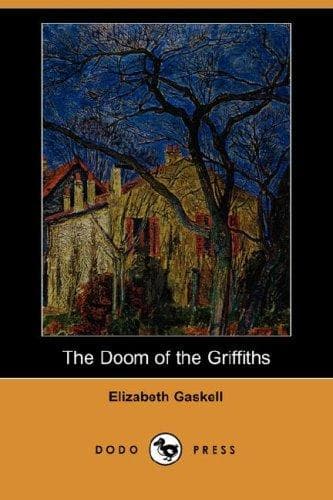
The Doom of the GriffithsGaskell, Elizabeth Cleghorn
General
The Doom of the Griffiths
Gaskell, Elizabeth Cleghorn
England -- Social life and customs -- 19th century -- Fiction; Horror tales, English
It was the time of day when a change in the aspect of the weather so
frequently takes place; and the little pool was no longer the reflection
of a blue and sunny sky: it sent back the dark and slaty clouds above,
and, every now and then, a rough gust shook the painted autumn leaves
from their branches, and all other music was lost in the sound of the
wild winds piping down from the moorlands, which lay up and beyond the
clefts in the mountain-side. Presently the rain came on and beat down in
torrents.
But Owen heeded it not. He sat on the dank ground, his face buried in
his hands, and his whole strength, physical and mental, employed in
quelling the rush of blood, which rose and boiled and gurgled in his
brain as if it would madden him.
The phantom of his dead child rose ever before him, and seemed to cry
aloud for vengeance. And when the poor young man thought upon the victim
whom he required in his wild longing for revenge, he shuddered, for it
was his father!
Again and again he tried not to think; but still the circle of thought
came round, eddying through his brain. At length he mastered his
passions, and they were calm; then he forced himself to arrange some plan
for the future.
He had not, in the passionate hurry of the moment, seen that his father
had left the cottage before he was aware of the fatal accident that
befell the child. Owen thought he had seen all; and once he planned to
go to the Squire and tell him of the anguish of heart he had wrought, and
awe him, as it were, by the dignity of grief. But then again he durst
not—he distrusted his self-control—the old prophecy rose up in its
horror—he dreaded his doom.
At last he determined to leave his father for ever; to take Nest to some
distant country where she might forget her firstborn, and where he
himself might gain a livelihood by his own exertions.
But when he tried to descend to the various little arrangements which
were involved in the execution of this plan, he remembered that all his
money (and in this respect Squire Griffiths was no niggard) was locked up
in his escritoire at Bodowen. In vain he tried to do away with this
matter-of-fact difficulty; go to Bodowen he must: and his only hope—nay
his determination—was to avoid his father.
He rose and took a by-path to Bodowen. The house looked even more gloomy
and desolate than usual in the heavy down-pouring rain, yet Owen gazed on
it with something of regret—for sorrowful as his days in it had been, he
was about to leave it for many many years, if not for ever. He entered
by a side door opening into a passage that led to his own room, where he
kept his books, his guns, his fishing-tackle, his writing materials, et
cetera.
Public-domain text, read in full here on John Shaqi.
Reviews
Reviews
No reviews yet
Be the first to share your thoughts on this work.
Join the Discussion
Join the discussion
Sign in to leave a comment or review.
Sign InorCreate an account