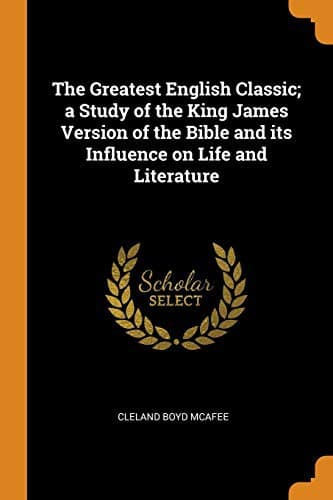
The Greatest English Classic: A Study of the King James Version of the Bible and Its Influence on Life and Literature — John Shaqi
The Greatest English Classic: A Study of the King James Version of the Bible and Its Influence on Life and LiteratureMcAfee, Cleland Boyd
Religion
The Greatest English Classic: A Study of the King James Version of the Bible and Its Influence on Life and Literature
McAfee, Cleland Boyd
Bible -- History; Bible -- Influence; Bible and literature; Bible. English -- Versions -- Authorized
The New Testament material was more abundant, though not nearly so
abundant as to-day. There were few manuscripts of the early days to which
they could refer; but there were the two great critical versions of the
New Testament in Greek, that by Erasmus and the Complutensian, which had
made use of the best manuscripts known. Then, finally again, there was the
Vulgate.
We must stop a moment to see what was the value of the Vulgate in this
work. It is impossible to reckon the number of the early New Testament
manuscripts that have been lost. In the earlier day the Scriptures were
transmitted from church to church, and from age to age, by manuscripts.
Many of them were made as direct copies of other manuscripts; but many
were made by scribes to whom the manuscripts were read as they wrote, so
that there are many, though ordinarily comparatively slight, variations
among the manuscripts which we now know. More manuscripts are coming to
light constantly, manuscripts once well known and then lost. Many of them,
perhaps many earlier than we now have, must have been familiar to Jerome
four hundred years after Christ. When, therefore, there is a plain
difference between the Vulgate and our early Greek manuscripts, the
Vulgate may be wrong because it is only a translation; but it may be right
because it is a translation of earlier manuscripts than some of ours. It
is steadily losing its value at that point, for Greek manuscripts are all
the time coming to light which run farther back. But we must not minimize
the value of the Vulgate for our King James translation.
With all this material the scholars of the early seventeenth century set
to work. Each man in the group made the translation that seemed best to
him, and together they analyzed the results and finally agreed on the
best. They hunted the other versions to see if it had been better done
elsewhere. The shade of Tindale was over it all. The Genevan version was
most influential. The Douai had its share, and the Bishops' was the
general standard, altered only when accuracy required it. On all hard
passages they called to their aid the appropriate departments of both
universities. All scholars everywhere were asked to send in any
contributions, to correct or criticize as they would. Public announcement
of the work was made, and all possible help was besought and gladly
accepted.
Public-domain text, read in full here on John Shaqi.
Reviews
Reviews
No reviews yet
Be the first to share your thoughts on this work.
Join the Discussion
Join the discussion
Sign in to leave a comment or review.
Sign InorCreate an account