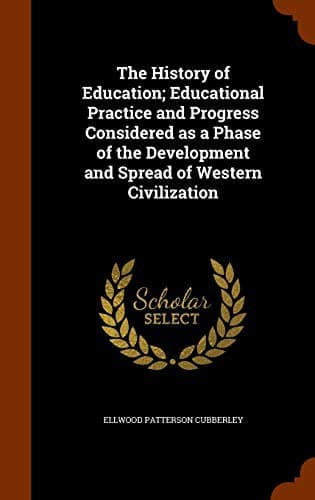
The History of Education: Educational Practice and Progress Considered as a Phase of the Development and Spread of Western Civilization — John Shaqi
The History of Education: Educational Practice and Progress Considered as a Phase of the Development and Spread of Western CivilizationCubberley, Ellwood Patterson
History
The History of Education: Educational Practice and Progress Considered as a Phase of the Development and Spread of Western Civilization
Cubberley, Ellwood Patterson
Education -- History
By the end of the eleventh century it was clear that the long battle for
the preservation of civilization had been won, but it was not until the
fourteenth century that the Revival of Learning in Italy gave clear
evidence of the rise of the modern spirit. By the year 1500 much had been
accomplished, and the new modern questioning spirit of the Italian Revival
was making progress in many directions. Most of the old learning had been
recovered; the printing-press had been invented, and was at work
multiplying books; the study of Greek and Hebrew had been revived in the
western world; trade and commerce had begun; the cities and the
universities which had arisen had become centers of a new life; a new sea
route to India had been found and was in use; Columbus had discovered a
new world; the Church was more tolerant of new ideas than it had been for
centuries; and thought was being awakened in the western world to a degree
that had not taken place since the days of ancient Rome. The world seemed
about ready for rapid advances in many directions, and great progress in
learning, education, government, art, commerce, and invention seemed
almost within its grasp. Instead, there soon opened the most bitter and
vindictive religious conflict the world has ever known; western Christian
civilization was torn asunder; a century of religious warfare ensued; and
this was followed by other centuries of hatred and intolerance and
suspicion awakened by the great conflict.
Still, out of this conflict, though it for a time checked the orderly
development of civilization, much important educational progress was
ultimately to come. In promulgating the doctrine that the authority of the
Bible in religious matters is superior to the authority of the Church, the
basis for the elementary school for the masses of the people, and in
consequence the education of all, was laid. This meant the creation of an
entirely new type of school--the elementary, for the masses, and taught in
the native tongue--to supplement the Latin secondary schools which had
been an outgrowth of the revival of ancient learning, and the still
earlier cathedral and monastery schools of the Church.
Public-domain text, read in full here on John Shaqi.
Reviews
Reviews
No reviews yet
Be the first to share your thoughts on this work.
Join the Discussion
Join the discussion
Sign in to leave a comment or review.
Sign InorCreate an account