The History of the 36th (Ulster) Division — John Shaqi
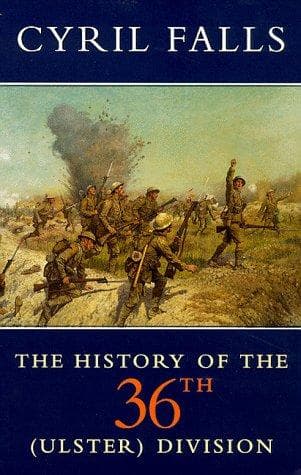
The History of the 36th (Ulster) DivisionFalls, Cyril
History
The History of the 36th (Ulster) Division
Falls, Cyril
Great Britain. Army. Division, 36th; World War, 1914-1918 -- Regimental histories -- Great Britain
become, in the mysterious fashion that such things happen, welded
into a whole, a spiritual unit. Little by little the group-spirit had
grown, till before the troops quitted Ireland a sensitive observer
might fancy he could detect it whenever he came in contact with them.
One factor in this group-spirit and in the whole life of the
Division, which is here approached with diffidence, but which could
not be omitted from a faithful record, was the element of religion.
It is sometimes forgotten that the Covenant of the seventeenth
century was taken almost as widely in Ulster as in Scotland.
Undoubtedly something of the old covenanting spirit, the old sense of
the alliance of "Bible and Sword," was reborn in these men. It was
the easier recreated because of the strength of religious feeling
which had existed in times of peace in Protestant Ulster, one of the
few parts of the country wherein the reformed churches had not, by
their own admission, lost ground in the last thirty years. Religious
feeling inspired the men of Ulster in those days of training, and
remained with them in the days of war. The General commanding the
4th Division, to which the 36th was attached for instruction after
its arrival in France, spoke of his astonishment at finding so many
Ulstermen reading their Bibles. The writer of this book can bear
witness from personal observation that it was not uncommon to find a
man sitting on the fire-step of a front-line trench, reading one of
the small copies of the New Testament which were issued to the troops
by the people at home. The explanation was that, on the one hand,
religion was near and real to them; on the other, that they were
simple men. They saw no reason to hide or disguise that which was a
part of their daily lives.
The people of Ulster were given an opportunity to see their Division
as a whole. On May the 8th it was inspected by Major-General Sir Hugh
McCalmont at Malone, afterwards marching through Belfast, the salute
being taken by the General at the City Hall. It was a fine day; the
City was dressed in bunting, and the main streets rocked with a mass
of enthusiastic spectators, who had crowded in by special train from
all about the Province. The troops were to remain two months longer
in Ireland, always on the tiptoe of expectation of a move, but that
was the real farewell of Ulster to the Division she had given to the
nation.
Public-domain text, read in full here on John Shaqi.
Reviews
Reviews
No reviews yet
Be the first to share your thoughts on this work.
Join the Discussion
Join the discussion
Sign in to leave a comment or review.
Sign InorCreate an account