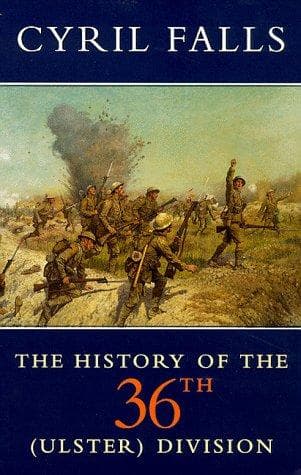
The History of the 36th (Ulster) DivisionFalls, Cyril
History
The History of the 36th (Ulster) Division
Falls, Cyril
Great Britain. Army. Division, 36th; World War, 1914-1918 -- Regimental histories -- Great Britain
By November the 4th the 107th Brigade, with its Light Trench Mortar
Battery, which had just arrived from England, and the 110th Field
Ambulance, were clear of the 36th Divisional area. On the 7th the
12th Brigade marched in to take its place. The 2nd Lancashire
Fusiliers of this Brigade were transferred to the 108th Brigade in
exchange for the 11th Rifles, and the 2nd Essex to the 109th in
exchange for the 14th Rifles. These inter-divisional changes lasted a
month only. Any advantages they may have had were found insufficient
to counterbalance the dislike of the break-up of their old formations
felt by battalions of both Divisions.
The Division as now constituted passed a winter very different
from that of its expectations. Late in November it moved down to
Abbeville, with Headquarters at Pont Remy, on the bank of the Somme
just outside that city. For the time it was concerned more with
sanitation than with war. Never was such cleaning of streets, such
draining of middens, such wholesale carting away of manure-heaps,
as when the Ulster Division marched into an area. The inhabitants
wondered and gaped, and a humorist wrote home that the troops "were
sweeping onward through village after village in the North of France."
Some writers--among them, it is to be regretted, a well-known
dramatist and critic of Ulster birth--have spoken unfavourably of the
French peasant and his attitude to the troops. There can be few men
of the 36th Division who look back upon the peasant-farmer of the
Somme with anything but affection and admiration. For their part,
the villagers testified by their letters and expressions of regret,
whenever a unit moved, how good had been the terms between troops and
civilians. The Calvinistic Ulsterman was sometimes a little startled
and pained at first on finding a countryside so liberally besprinkled
with shrines and crucifixes, but, if he were a countryman,
especially, he made the surprising discovery that these countrymen of
the Somme were very like himself. They thought twice before speaking
once; they had a certain dourness; they did not wear their hearts on
their sleeves, though they were furnished with those organs in the
proper places.
On November the 26th two of the Field Companies, the 121st and
150th, were returned by the Third Army, and began to assist and
supervise the infantry at work in the villages. In view of the
projected spring offensive, not actually launched till after
midsummer, all these back areas were being prepared to accommodate
large bodies of troops in some comfort. Bunks were put into barns,
the holes which had appeared in the lath and mud walls, through
shortage of male labour in the villages, were repaired, and excellent
horse-lines, with standings of chalk and stone, were built. The
timber was cut locally and sawn by the troops themselves, using their
own saw-mill.
Public-domain text, read in full here on John Shaqi.
Reviews
Reviews
No reviews yet
Be the first to share your thoughts on this work.
Join the Discussion
Join the discussion
Sign in to leave a comment or review.
Sign InorCreate an account