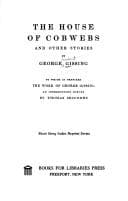
The House of Cobwebs and Other StoriesGissing, George
General
The House of Cobwebs and Other Stories
Gissing, George
Great Britain -- Social life and customs -- 19th century -- Fiction; Short stories
'At Cotrone the tone of the dining-room was decidedly morose. One
man--he seemed to be a sort of clerk--came only to quarrel. I am
convinced that he ordered things which he knew that the people could
not cook, just for the sake of reviling their handiwork when it was
presented. Therewith he spent incredibly small sums; after growling
and remonstrating and eating for more than an hour, his bill would
amount to seventy or eighty centesimi, wine included. Every day he
threatened to withdraw his custom; every day he sent for the landlady,
pointed out to her how vilely he was treated, and asked how she could
expect him to recommend the Concordia to his acquaintances. On one
occasion I saw him push away a plate of something, plant his elbows on
the table, and hide his face in his hands; thus he sat for ten
minutes, an image of indignant misery, and when at length his
countenance was again visible, it showed traces of tears.'--(pp.
102-3.)
The unconscious paganism that lingered in tradition, the half-obscured
names of the sites celebrated in classic story, and the spectacle of the
white oxen drawing the rustic carts of Virgil's time--these things roused
in him such an echo as _Chevy Chase_ roused in the noble Sidney, and made
him shout with joy. A pensive vein of contemporary reflection enriches the
book with passages such as this:--
'All the faults of the Italian people are whelmed in forgiveness as
soon as their music sounds under the Italian sky. One remembers all
they have suffered, all they have achieved in spite of wrong. Brute
races have flung themselves, one after another, upon this sweet and
glorious land; conquest and slavery, from age to age, have been the
people's lot. Tread where one will, the soil has been drenched with
blood. An immemorial woe sounds even through the lilting notes of
Italian gaiety. It is a country, wearied and regretful, looking ever
backward to the things of old.'--(p. 130.)
Public-domain text, read in full here on John Shaqi.
Reviews
Reviews
No reviews yet
Be the first to share your thoughts on this work.
Join the Discussion
Join the discussion
Sign in to leave a comment or review.
Sign InorCreate an account