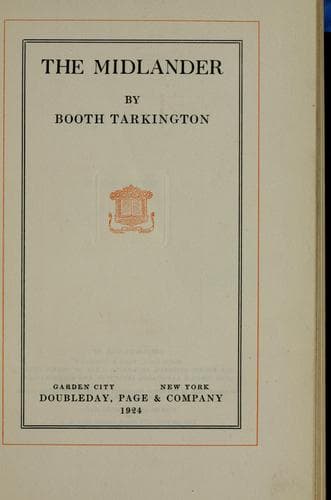
Middle West -- Fiction; Real estate developers -- Fiction; Suburbs -- Fiction
The long avenue might well have been mistaken for a colony of invalids
and listless convalescents. Damp and languid citizens, their coats over
bared forearms, made their painful way homeward from downtown, mopping
fiery brows and throats; other coatless citizens, arrived at home,
reclined melting in wicker rocking-chairs upon their verandas or lawns,
likewise mopping as they melted; while beside them their wives and
daughters, in flimsiest white, sat fanning plaintively. Here and there
the stout father of a family stood near his front fence and played a
weak and tepid stream from the garden hose over his lawn, or sprinkled
the street, while his children, too hot to be importunate, begged
lifelessly to relieve him of the task. The leaves of the massed foliage
that made the street a green tunnel hung flaccidly gilding in the sun;
and the sun abated not at all as it approached its setting. The air
drooped upon the people with a weight too heavy to let them move
readily, yet for breathing there seemed to be no air; and it had no
motion, so that the transparent bits of paper, where the popcorn man or
the hokey-pokey man had passed, lay in the street and on the sidewalks
as still as so much lead.
“Seem like ev’thing wilted down flat,” Mr. Shelby’s fat coachman
remarked as they turned into the driveway at home. “Me, I reckon if
you’s to take little slim string o’ cobweb up on the roof an’ push ’er
off, she’d fall ri’ down on the groun’ same as a flatiron. Look
fountain, Mist’ Shelby!” He laughed happily, and waved his whip toward
the bronze swan. “That duck, let alone he ain’t got stren’f ’nough to
spout, he ain’t but jes’ hodly able to goggle his th’oat little bit.”
The swan was indeed put to it to eject a faint spray, for all over the
town the people were making such demands on the water, already low with
the dry season, that the depleted river whence it came threatened to
disappear unless the drought were broken. However, neither drought nor
heat had to do with Mr. Shelby’s peevishness, which visibly increased
when the carriage turned into his driveway;—what made him frown so
bitterly was the sight of his daughter, charmingly dressed in fabrics of
gossamer weight, her shapely hands gloved in spite of the weather, and
her hazel eyes bright under a hat of ivory lace. She was sitting upon a
wicker bench on the big veranda, but when the lathered bay horses
trotted through the driveway gate, she jumped up and hurried to meet her
father as he stepped out upon a stone horseblock near the veranda steps.
“Papa!” she cried, “you must hurry; we’re terribly late! I wouldn’t have
waited for you, but I was afraid you wouldn’t go unless I took you.”
“I wouldn’t,” he said grimly. “You bet your sweet life I wouldn’t!”
“_Won’t_ you hurry?” she urged.
“What for? Ain’t I dressed up enough? All I’m goin’ to do is wash my
hands.”
“Then do,” she cried, as he moved to go indoors. “_Please_ hurry!”
Public-domain text, read in full here on John Shaqi.
Reviews
Reviews
No reviews yet
Be the first to share your thoughts on this work.
Join the Discussion
Join the discussion
Sign in to leave a comment or review.
Sign InorCreate an account